Leave Your Message
Global shipping demands packaging that protects products through vibration, compression, humidity, and repeated handling. More than 80% of world trade by volume moves by sea, according to UNCTAD. That journey can expose cartons and bundled goods to salt air, unstable pallets, and sudden temperature changes. Shrink Packaging Roll creates a tight protective layer around loads, reducing movement and helping prevent moisture, dust, and surface abrasion.
The market is also changing. Smithers’ global packaging research identifies continued growth in flexible packaging, supported by e-commerce, export activity, and demand for lighter materials. However, lighter does not always mean better. A thin film can tear around sharp carton corners. A thicker film can increase material use without improving protection. The right gauge, width, shrink ratio, and sealing method must match the product and transport route.
Small details matter.
A warehouse team may notice fewer loose cartons after stretch and shrink testing. A distributor may see cleaner labels after a wet voyage. These practical results should be verified through controlled trials, pallet checks, and relevant ISTA or ASTM testing.
Ellen MacArthur, a leading circular-economy authority, cautions, “We cannot recycle our way out of the plastic pollution crisis.” Her statement deserves serious attention. The OECD’s Global Plastics Outlook reported 353 million tonnes of plastic waste in 2019. Therefore, selecting Shrink Packaging Roll should involve protection, material efficiency, recyclability, and realistic end-of-life conditions. It is not a perfect solution. It is a measurable packaging decision that requires evidence, adjustment, and honest review.
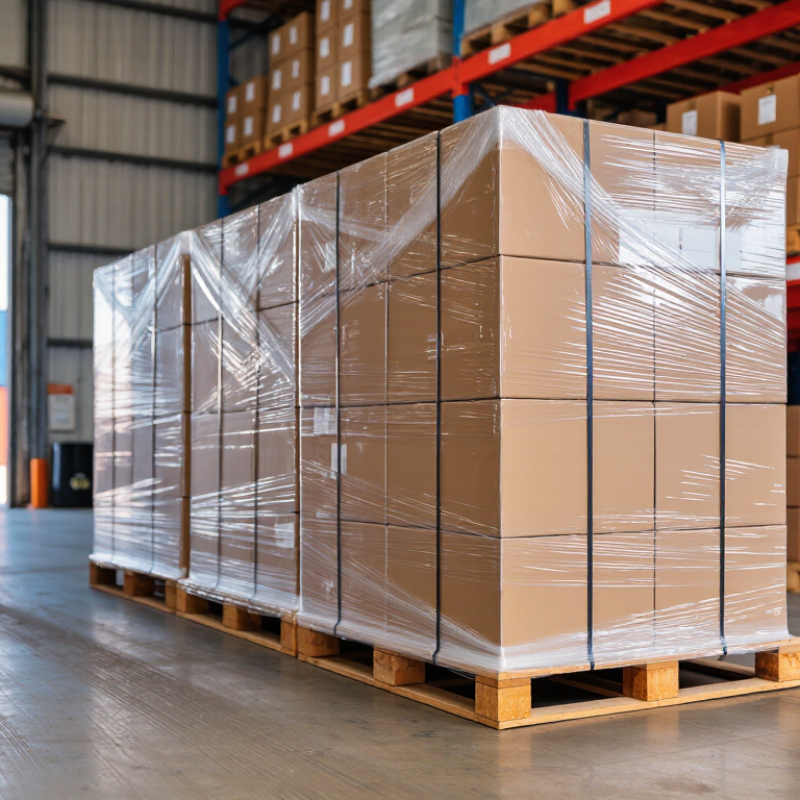
Shrink packaging roll is a continuous polymer film wound around a core. It is cut to fit products, cartons, or grouped items. After controlled heat is applied, the film contracts tightly around the load. This creates a clear protective layer against dust, light moisture, scuffing, and loose handling.
The process is simple, but the settings matter. Workers usually place the film around the item, seal or fold the edges, and pass it through a heat tunnel or use a heat gun. The film should tighten evenly without burning, tearing, or crushing the package. Polyolefin film suits many retail and mixed-product applications, while polyethylene film is often selected for heavier bundles. Film thickness, shrink ratio, sealing strength, and temperature should match the product.
A practical packing test can reveal problems before export. Check corners, seams, and the underside after simulated lifting and vibration. A carton may look secure but still slide inside the film. That weakness is easy to miss. Moisture resistance also has limits; shrink film is not a substitute for a sealed waterproof container. Clear film helps with identification and inspection, yet excessive tension can damage labels or soft packaging. For global shipping, consistent application, readable markings, and documented quality checks make the roll more dependable across changing warehouses and transport conditions.
| Data Dimension | Typical Industry Data | How It Supports Global Shipping |
|---|---|---|
| Definition | Shrink packaging roll is a continuous roll of polymer film that contracts when exposed to controlled heat. | The continuous format supports high-throughput wrapping and flexible package lengths. |
| Common Film Materials | Polyolefin (POF), polyethylene (PE), and PVC are commonly used film families. POF and PE are widely selected for logistics and retail packaging. | Material selection can be matched to load size, required strength, appearance, and handling conditions. |
| Typical Thickness | Approximately 12–250 micrometres (µm), depending on film type and application. | Thinner films can reduce packaging material and shipping weight; thicker films provide additional puncture and load protection. |
| How Shrinkage Works | The film is manufactured with oriented polymer chains. Heat releases part of this orientation, causing the film to contract around the product. | Contraction creates a close-fitting protective layer that helps keep products grouped during transport. |
| Typical Shrink Ratio | Many commercial films provide approximately 5–80% shrinkage in one or both directions, depending on the film specification. | Controlled shrinkage helps improve fit around irregular products and reduce loose film. |
| Typical Activation Temperature | Common heat-shrink processing temperatures are approximately 90–200°C, depending on polymer type, thickness, and equipment. | Correct temperature control helps prevent weak seals, excessive shrinkage, film distortion, and product damage. |
| Moisture Protection | Most shrink films provide a continuous barrier against surface moisture and splashes; barrier performance varies by polymer and film structure. | The wrap can help protect cartons and products from rain, condensation, and short-term exposure during handling. |
| Dust and Contamination Control | A properly sealed film layer reduces direct contact with dust, dirt, and handling contaminants. | Useful for multi-stage international logistics where goods may be stored or transferred several times. |
| Load Stability | Tight film tension can bundle products and reduce shifting, but shrink film is not a complete substitute for pallets, strapping, corner protection, or proper stacking. | Improved unit stability can reduce movement-related damage during truck, rail, sea, and air transport. |
| Transparency | Clear films allow visual inspection of labels, product condition, and package integrity without removing the wrap. | Faster inspection can support customs checks, warehouse identification, and inventory control. |
| Packaging Efficiency | The film is supplied in rolls and can be cut to the required length, helping minimize excess packaging compared with fixed-size packaging formats. | Right-sized wrapping can reduce material consumption, storage space, and outbound packaging weight. |
| Application Methods | Common methods include manual heat-gun application, semi-automatic sealing, and automatic bundling or shrink-wrapping systems. | Different equipment levels allow the packaging process to scale from low-volume export orders to high-volume production. |
| Puncture and Tear Resistance | Resistance depends on resin type, thickness, orientation, additives, and sealing quality. PE films are often selected where higher toughness is required. | Higher resistance helps reduce film failure caused by sharp edges, vibration, and repeated handling. |
| Temperature Considerations | Performance can change under extreme heat, cold, or direct sunlight. Film specifications should be checked against the expected transport and storage range. | Selecting a suitable film reduces brittleness, relaxation, deformation, and seal failure during long-distance shipping. |
| Recyclability Consideration | Recyclability depends on the polymer, additives, printing, local collection systems, and contamination level. Single-material polyethylene streams are generally easier to sort than mixed-material structures. | Choosing a compatible material and following local recycling rules can improve end-of-life management. |
| Key Selection Factors | Product dimensions, weight, sharp edges, required shrink force, transport route, climate, equipment, film thickness, and applicable packaging regulations. | A specification-based selection improves protection, process consistency, and total logistics efficiency. |
Note: Values shown are typical industry ranges and may vary by film formulation, manufacturing process, equipment, and application. Always verify the technical data sheet and perform transport-condition testing before commercial use.