7 Best Shrink Packaging Roll Suppliers for Global Buyers
Choosing the right Shrink Packaging Roll supplier can influence product protection, shelf appearance, and packing-line efficiency. For global buyers, the decision involves more than comparing prices. Film thickness, shrink ratio, clarity, roll width, core size, and sealing performance must match the application and machinery.
This guide introduces seven suppliers with practical buying factors in mind. These include manufacturing experience, quality-control systems, export capability, minimum order quantities, lead times, and technical support. A reliable supplier should provide clear specifications, recent test data, and traceable production information. Samples matter. A roll may look excellent under warehouse lighting but perform poorly around sharp corners or uneven products.
No supplier is perfect. Buyer requirements also differ. A beverage producer may prioritize high-speed sealing, while a hardware distributor may need stronger puncture resistance. Certifications should be checked against the destination market and intended use, rather than accepted at face value. That small step prevents expensive surprises.
The comparison aims to support informed conversations with manufacturers and distributors. It does not replace sample trials, equipment testing, or independent verification. Ask direct questions about resin composition, storage conditions, defect controls, and after-sales response. Check the details.
Global purchasing also requires realistic planning. Ocean freight delays, seasonal demand, and changing order volumes can affect total cost. The strongest supplier is not always the cheapest one. It is often the partner that communicates clearly, maintains consistent quality, and solves problems before they reach the packing line.
What Shrink Packaging Rolls Are and How They Work
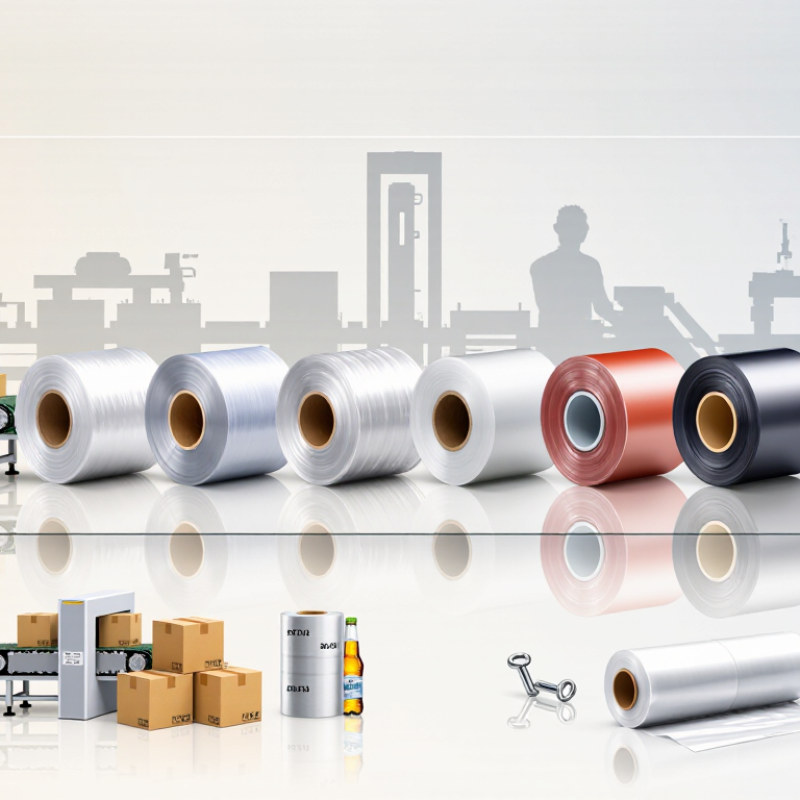
Shrink packaging rolls are continuous films wound around a core. They create bags, sleeves, or overwraps for products during packing. Common materials include polyolefin and polyethylene, selected for different strength, clarity, and shrinkage needs.
The film works through controlled heat. A packaging machine unwinds the roll and wraps the product. A sealing bar closes the film around its edges. Then, a heat tunnel or hot-air system warms the film. Its polymer structure contracts, pulling the film tightly around the item. Cooling locks the shape in place.
Shrinkage is not automatic perfection.
Temperature, tunnel speed, film thickness, and package shape must work together. Too much heat can cause holes, wrinkles, or distorted labels. Too little heat leaves loose film. In practical trials, operators should test several settings instead of trusting a supplier’s general specification.
Global buyers should request roll width, thickness, shrink ratio, core size, and recommended sealing temperatures. Clear technical data matters. Food, medical, and consumer applications may also require material-specific compliance documents. A reliable supplier should explain tolerances, storage conditions, and machine compatibility. Buyers often overlook storage; humidity and excessive heat can affect film performance before production even begins.
Key Factors for Comparing Global Shrink Film Suppliers
7 Best Shrink Packaging Roll Suppliers for Global Buyers
When comparing global shrink film suppliers, product consistency matters more than a low quoted price. Check film gauge across the roll, shrink ratio, clarity, puncture resistance, and sealing performance. A reliable supplier should provide current technical data, batch records, and practical test samples. Ask how the film performs on your actual machine, especially around corners, handles, and uneven cartons. Small defects become expensive at high production speeds.
Capacity and delivery also deserve close attention. Review minimum order quantities, lead times, export packaging, payment terms, and shipping responsibilities. Suppliers should explain how they manage peak-season demand and material shortages. Request evidence of quality controls and confirm that documents match the delivered film. A polished datasheet can still hide production variation. I have learned that sample approval alone is not enough; retain a reference roll for later comparison. Sustainability claims need scrutiny, too. Ask for measurable recycled content, recyclability information, and relevant compliance documents for each destination market.
Tips: Test at least three samples under identical temperature and speed settings. Record shrink percentage, seal strength, odor, and roll tension. Keep the results beside the quotation. Price alone misleads. Also, ask for a corrective-action process when a batch fails. Suppliers who respond clearly are usually easier to manage across borders. Still, no evaluation is perfect; actual warehouse conditions may reveal problems that laboratory tests miss.
7 Best Shrink Packaging Roll Suppliers for Global Buyers - Key Factors for Comparing Global Shrink Film Suppliers
| Supplier Profile |
Main Film Types |
Typical Thickness Range |
Typical Shrink Ratio |
Common Roll Widths |
Best-Suited Applications |
Typical Order Flexibility |
Key Verification Points |
| Supplier Profile 1 |
Polyolefin shrink film |
9–25 microns |
MD: 40–65%; TD: 35–65% |
200–1,200 mm |
Retail multipacks, food items, consumer goods |
Small to medium custom orders |
Seal strength, optical clarity, FDA or EU food-contact documentation |
| Supplier Profile 2 |
Polyethylene shrink film |
40–200 microns |
MD: 20–80%; TD: 10–40% |
300–2,500 mm |
Bundling, pallet wrapping, beverage and industrial packs |
Medium to high-volume orders |
Puncture resistance, load stability, recycled-content options |
| Supplier Profile 3 |
PVC shrink film |
30–80 microns |
MD: 40–60%; TD: 40–60% |
100–1,000 mm |
Retail packaging, stationery, gift products |
Standard sizes with limited customization |
Plasticizer compliance, odor, heat-sealing performance, destination-market restrictions |
| Supplier Profile 4 |
Centerfold polyolefin film |
12–25 microns |
MD: 50–70%; TD: 45–70% |
250–1,500 mm folded width |
High-speed automatic side-seal and L-seal packaging |
Medium-volume orders with custom roll lengths |
Film tracking, roll winding accuracy, splice frequency, machine compatibility |
| Supplier Profile 5 |
Printed shrink film |
30–80 microns |
MD: 35–65%; TD: 35–65% |
200–1,000 mm |
Labels, sleeves, promotional packaging |
Higher minimum order quantities for custom printing |
Color consistency, ink adhesion, barcode readability, artwork approval process |
| Supplier Profile 6 |
Heavy-duty PE shrink film |
80–200 microns |
MD: 20–60%; TD: 10–35% |
500–3,000 mm |
Construction products, furniture, large industrial loads |
High-volume and contract manufacturing orders |
Tensile strength, tear resistance, impact performance, pallet-load testing |
| Supplier Profile 7 |
Sustainable or recycled-content shrink film |
15–100 microns |
Depends on resin and structure |
200–2,000 mm |
Brands seeking downgauging or lower-impact packaging |
Usually medium-volume with qualification requirements |
Recycled-content percentage, chain-of-custody records, recyclability, life-cycle documentation |
Comparison note: The specifications shown are representative market ranges for shrink packaging films. Actual availability, minimum order quantities, roll dimensions, certifications, and performance should be confirmed through supplier quotations and technical data sheets.
Seven Leading Shrink Packaging Roll Suppliers for International Buyers
For international buyers, the seven leading shrink packaging roll suppliers are best assessed by capability, not advertising. They include a high-volume film converter, a recyclable-film specialist, a custom-printed producer, a heavy-duty industrial supplier, a food-contact manufacturer, a regional export converter, and a flexible low-volume partner. Each profile serves a different purchasing need. That distinction matters.
In real sourcing work, I check resin traceability, film gauge tolerance, shrink ratio, seal strength, and roll winding quality. A dependable supplier provides technical data sheets, batch records, and samples before quotation approval. Food and consumer packaging may also require documented migration testing and compliant production controls. Ask for a certificate of analysis with every shipment. Small details prevent large waste.
International delivery requires more than competitive pricing.
Review monthly capacity, core dimensions, pallet protection, lead times, and customs paperwork. Suppliers with in-house slitting can adjust roll width and reduce conversion delays. Recycled-content claims deserve careful verification through chain-of-custody documents. I have seen attractive samples fail during high-speed sealing because the film behaved differently under humidity. That risk is easy to underestimate. Buyers should compare trial results, not promises, and record performance across several production runs. A supplier may look technically strong yet communicate poorly after payment. Reliability includes difficult conversations.
Supplier Capabilities, Certifications, and Export Coverage
When comparing the seven best shrink packaging roll suppliers, assess their actual production capabilities, not only catalog photos. Reliable suppliers should offer POF, PE, or PVC alternatives, with clear thickness, width, roll length, and core-size specifications. Ask for samples from different production batches. Small variations can affect sealing and tunnel performance.
Certification evidence also matters. Look for ISO 9001 quality systems, relevant environmental certifications, and documented food-contact compliance when required. A certificate alone proves little. Verify its validity, issuing body, and covered factory. Suppliers with in-house testing can report tensile strength, shrink ratio, haze, and seal strength. I have seen impressive test reports fail to match delivered rolls. That gap deserves attention.
Export coverage shows operational maturity. Check experience with your destination, shipping documents, pallet standards, Incoterms, and customs support. Regional warehouses may shorten delivery times, while flexible production can reduce emergency shortages. Still, broad export claims need proof, such as anonymized shipping records or references. No supplier is perfect.
Tips: Request a trial order before signing a yearly contract. Confirm lot numbers, carton markings, moisture protection, and complaint response times. Compare total landed cost, not just the roll price. Also ask how the supplier handles recycled content or production waste. Sustainability claims can be vague, and buyers should challenge them politely.
How to Select the Best Supplier for Your Packaging Needs
Selecting among the seven best shrink packaging roll suppliers requires more than comparing price per kilogram. Film performance affects sealing speed, product visibility, waste, and damage during transport. Smithers’ market outlook reports continued growth in global shrink film demand, driven by food, beverage, and logistics applications. This growth also increases supplier differences.
Ask each supplier for recent technical data, not attractive samples alone. Check shrink temperature, shrink ratio, puncture resistance, thickness tolerance, and roll winding quality. A roll that wrinkles around a sharp carton can stop an entire packing line. Request trial rolls using your actual machine settings and product dimensions. Small tests reveal costly weaknesses.
Reliable suppliers should provide traceable raw material information, consistent production records, and clear export documentation. ISO 9001 certification can support process control, but certification is not proof of perfect film. Review complaint handling times and replacement policies. The Packaging Machinery Manufacturers Institute has repeatedly identified labor efficiency and operational reliability as major packaging concerns, making stable film quality commercially important. Cost still matters. However, a cheaper roll may create more scrap, downtime, and rejected packs. I would also question my own selection habits: one successful trial does not prove long-term consistency. Compare at least three production batches, including one from a different season.