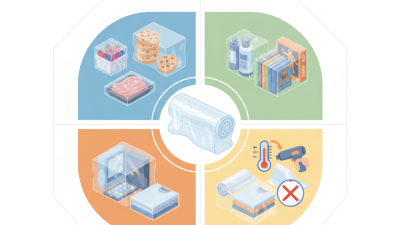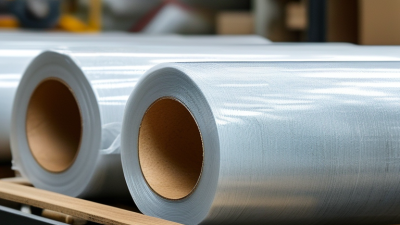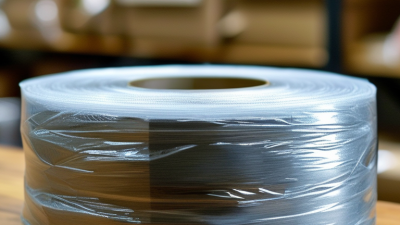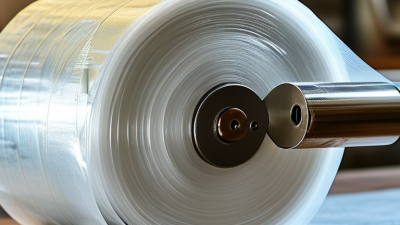
Pof Shrink Film is a clear, heat-shrinkable polyolefin material used to bundle, protect, and present products. It appears around bakery trays, cosmetic boxes, household goods, and retail multipacks. When heated in a tunnel, the film contracts closely around the package. The result is a smooth surface, visible contents, and a tamper-evident seal. Small details matter. A poorly adjusted tunnel can create wrinkles, weak seals, or unnecessary film waste.
Industry data shows why this material deserves careful attention. Smithers’ packaging market research forecasts global packaging demand will surpass US$1.3 trillion by 2028. Grand View Research also identifies steady growth in the global shrink film market, supported by food distribution, e-commerce, and automated packaging lines. These figures describe the wider market, not POF alone. That distinction is important. Market reports often group POF with other shrink materials, which can make direct comparisons difficult.
Packaging specialist Tom Egan describes film selection as “a balance between product protection, machine performance, and total cost.” That practical view fits Pof Shrink Film well. Its strong clarity and balanced shrink force can improve shelf presentation. It can also run efficiently on modern equipment when temperature, sealing time, and tension are controlled. However, no film solves every packaging problem. Product shape, storage conditions, seal design, and recycling requirements must be checked together. The most attractive wrap may still be the wrong technical choice. This guide examines how Pof Shrink Film works, where it performs best, and which decisions deserve closer review.
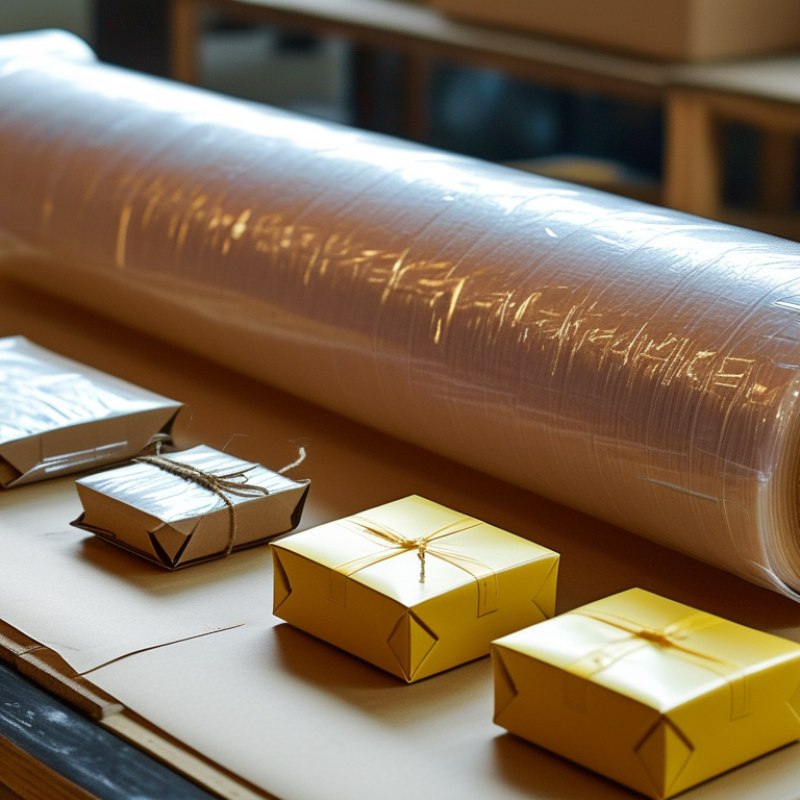
POF shrink film is a transparent, multilayer packaging material made from polyolefin resins. Its layers are coextruded, creating balanced strength, clarity, and dependable sealing. Common gauges range from 7.5 to 30 μm. Thin gauges suit light products, while thicker films handle sharper edges and heavier bundles.
During heating, POF film contracts around the load. Typical shrink performance reaches 50–70%, although results depend on direction, temperature, dwell time, and airflow. A heat tunnel softens the film, while controlled air removes wrinkles and creates a close fit. This process suits cartons, printed materials, household goods, gift sets, and grouped retail products. It can protect surfaces from dust and minor handling marks without hiding the package.
Good results require more than choosing a gauge. Operators should match film width to the product, adjust sealing pressure, and inspect the seal for weak corners. Small changes matter. Excessive heat can distort labels or create brittle seams. Insufficient heat leaves loose, cloudy wrapping. A package may look acceptable, yet fail during transport. Trial runs, drop checks, and seal inspections remain important. POF is versatile, but it is not a universal setting; product shape, line speed, and equipment condition still influence the final appearance.
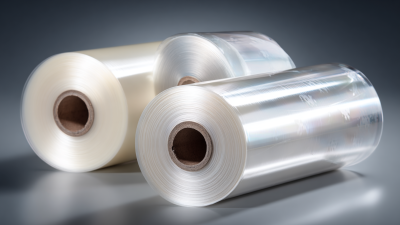
POF shrink film is a clear, multilayer plastic film used to bundle products and create a close, protective wrap. Its performance depends on heat, film structure, package shape, and sealing quality. A tunnel setting that works for one package may distort another. Small differences matter.
ASTM D2732 helps measure free shrink under controlled heating. Cut marked film specimens, expose them according to the current test method, and record dimensional changes in both machine and transverse directions. The basic calculation is simple: shrinkage equals the original length minus the final length, divided by the original length. Measure both directions. The result shows potential shrink, not guaranteed tunnel performance. Film may shrink unevenly around corners, seals, or printed areas.
For tunnel trials, begin near 120°C and increase gradually toward 180°C only when necessary. Use the lowest temperature that produces a tight wrap without holes, whitening, or excessive distortion. Adjust conveyor speed and airflow with temperature. Higher heat with a fast conveyor can leave loose panels, while slower movement may over-shrink thin sections. Check the actual film surface when possible; tunnel air temperature is not the same measurement. In production trials, observe seal strength, package stability, and visual clarity after cooling. Do not chase gloss. One imperfect result can reveal a useful setting problem. Keep a written record of temperature, speed, airflow, film thickness, and package dimensions. Recheck the process when film lots or package designs change.
Polyolefin (POF) shrink-film tunnels are commonly operated within an approximately 120–180°C air-temperature range, depending on film construction, package geometry, conveyor speed, and airflow. ASTM D2732 measures unrestricted linear thermal shrinkage under controlled laboratory conditions; tunnel temperature settings are production parameters and should be validated for each film and package.
POF shrink film is a multilayer polyolefin film designed to tighten around products when heated. It commonly uses polyethylene and polypropylene structures. FDA 21 CFR 177.1520 covers many olefin polymers used with food, but compliance is not automatic. Resin type, additives, thickness, food category, and temperature conditions must match the regulation.
That detail matters.
Compared with PVC, POF usually offers better clarity, softer handling, and fewer concerns about chlorine-containing chemistry. PVC can shrink efficiently, but its performance may change with plasticizer selection and disposal requirements. POF also tends to resist tearing better during retail handling. PE film is tougher and more flexible, yet it generally provides lower shrink force and less glass-like presentation. In practice, PE suits bundling and heavier loads, while POF suits cartons, bakery trays, and multipacks.
ASTM D2732 testing measures free shrink, while ASTM D882 evaluates tensile properties. These tests help convert vague claims into measurable film behavior. PlasticsEurope reported global plastics production of 400.3 million tonnes in 2022, showing the scale of material selection across packaging. Still, laboratory results can mislead when sealing temperature, tunnel airflow, or package corners change. A film that looks excellent on a test roll may wrinkle around a sharp tray. That is an easy mistake. Product trials, migration documentation, and supplier declarations remain necessary before food-contact use.
What Is POF Shrink Film and How Is It Used?
POF shrink film is a clear, multilayer polyolefin film used for bundling and protecting products. The Flexible Packaging Association reported about 39 billion dollars in U.S. flexible packaging sales in 2022. That figure shows the scale of demand for efficient film systems. POF is commonly supplied in center-folded rolls, often between 12 and 25 microns thick. Film sizing matters. Leave roughly 3–8 centimeters of clearance around the product, depending on its shape and shrink ratio.
The sealing step uses an L-bar machine. Place the product squarely inside the folded film, then lower the heated bar across the film. A clean seal needs steady pressure, correct temperature, and a sharp sealing wire. Weak seals may split in the tunnel. Excessive heat can create cloudy edges or holes. Tunnel shrinking follows sealing. Hot air tightens the film around the pack, while conveyor speed controls exposure time. ASTM D2732 is often referenced for free shrink testing, but real packages still require production trials.
Tips: Keep the film path clean. Test three temperatures. Check corner tension by hand. Small adjustments matter. Smithers’ flexible packaging research continues to identify lightweight films as an important efficiency direction. Still, thinner film is not automatically better. I have seen operators reduce thickness, then lose stability on sharp corners. Measure seal strength, appearance, and pack protection before changing the specification.
| Application Stage | Main Objective | Typical Data or Formula | Recommended Operating Guidance | Quality Check | Common Problems and Corrective Action |
|---|---|---|---|---|---|
| 1. Film Selection | Select a transparent, heat-shrinkable polyolefin film suitable for the product, package shape, and sealing equipment. |
Common thickness range: 12.5–25 µm. Typical shrink performance depends on the film grade and may be approximately 50–65% in the machine direction and 35–50% in the transverse direction. |
Use thinner film for lightweight products and thicker film for heavier, sharp-edged, or grouped products. Confirm that the film is approved for the intended packaging application. | Check film thickness, width, clarity, coefficient of friction, shrink direction, and compatibility with the sealing bar and shrink tunnel. | Excessive tearing may indicate insufficient thickness or sharp product edges. Haze or poor shrink appearance may indicate unsuitable film or excessive tunnel heat. |
| 2. Film Sizing | Determine the correct film width and length so the product is fully enclosed without excessive loose film. |
For centerfold film: Required layflat width ≈ product width + product height + sealing allowance. Film length should be approximately: product length + front and rear end allowances. |
Start with an end allowance of about 25–75 mm per end, then adjust according to product geometry, film shrink ratio, and machine configuration. | The film should cover all product surfaces before sealing. Avoid excessive overlap, large empty pockets, and contact between the product and the sealing wire. | Short film dimensions can expose the product or create weak seals. Oversized film can cause excessive wrinkles, large tails, and unnecessary material consumption. |
| 3. Product Positioning | Place the product centrally inside the centerfold film to maintain balanced sealing and shrinking. | Keep the product aligned with the film fold and conveyor direction. Maintain a consistent gap between the product and the film edges. | Product edges should not protrude beyond the sealing area. Use guides or a controlled infeed when repeatable positioning is required. | Inspect the film overlap on both sides and verify that the product remains stable during transfer to the sealing area. | Product movement can create diagonal seals and uneven shrinkage. Reduce conveyor vibration, improve guides, or adjust the film size. |
| 4. L-Bar Sealing | Create a continuous seal around the product package while cutting away excess film. |
Typical sealing-bar temperature: approximately 120–160°C, depending on film structure and equipment. Typical sealing dwell time: approximately 0.5–2.0 seconds. |
Adjust temperature, dwell time, and pressure together. The sealing bar should make a clean, continuous seal without burning, sticking, or stretching the film. | Check seal continuity, seal width, edge strength, cut quality, and the absence of holes or carbonized areas. | Weak seals may require slightly higher temperature, longer dwell time, or increased pressure. Burn-through usually requires lower temperature, shorter dwell time, or reduced pressure. |
| 5. Seal Inspection | Confirm that the package can enter the tunnel without opening or developing a defect. | A properly formed seal should be continuous and visibly bonded across the entire seal line. The film should not be trapped on the wrong side of the cutting wire. | Allow the seal to stabilize briefly before aggressive handling, particularly when using high sealing temperatures or heavy products. | Perform visual inspection and periodic manual pull testing. Check corners, intersections, and areas near sharp product features. | Pinholes at corners may result from excessive film tension or insufficient end allowance. Reposition the product or increase the corner clearance. |
| 6. Tunnel Shrinking | Apply controlled heat so the film contracts uniformly around the product and forms a close-fitting package. |
Common tunnel air-temperature range: approximately 120–180°C. Typical exposure time: approximately 2–5 seconds, depending on conveyor speed, package size, and film grade. |
Begin with moderate heat and conveyor speed. Increase heat or reduce speed gradually until the film is tight without distortion or excessive gloss loss. | Evaluate film tightness, wrinkle level, corner coverage, seal integrity, product protection, and package appearance after cooling. | Loose film may require more heat or longer exposure. Scorching, holes, or excessive distortion indicate too much heat, excessive dwell time, or poor airflow balance. |
| 7. Cooling and Stabilization | Allow the package and film to cool so the final appearance and seal strength can stabilize. | Cooling time varies with package mass, film thickness, tunnel output, and ambient conditions. Handle hot packages carefully. | Use ambient cooling or a controlled cooling zone when high throughput or appearance consistency is important. | Inspect the package after cooling rather than immediately at the tunnel exit. Confirm that wrinkles, seals, and corners remain stable. | Film relaxation after cooling can indicate insufficient shrink exposure, excessive film size, or an unsuitable shrink profile for the product. |
| 8. Process Optimization | Balance material use, package appearance, throughput, and sealing reliability. | Key variables include film thickness, film width, sealing temperature, sealing dwell time, tunnel temperature, conveyor speed, airflow, and package orientation. | Change one variable at a time and record results. Establish an operating window rather than relying on a single machine setting. | Track seal defect rate, package rework, film consumption, tunnel output, and visual quality across multiple production runs. | Inconsistent results may be caused by fluctuating tunnel temperature, worn sealing components, film-roll variation, incorrect centering, or unstable conveyor speed. |
POF shrink film is a clear, multi-layer polyolefin film used to bundle and protect products. Heat activates its memory, pulling the film tightly around cartons, trays, or irregular items. In practice, selection starts with the package, not the film roll. A heavy box needs stronger restraint than a lightweight retail pack. Good operators test both.
Shrink force describes the film’s pulling force during heating and cooling. Too little force leaves loose corners and wrinkles. Too much force can crush fragile packs or distort labels. Measure force at the actual tunnel temperature, because laboratory values may not match production conditions. COF, or coefficient of friction, controls how film moves across rollers and conveyors. High COF can cause drag, while low COF may reduce package stability. Surface treatments and dust can change readings over time.
Seal strength must survive handling, compression, and shipping vibration. A seal can look clean yet fail under a modest pull test. Technicians should check seal temperature, dwell time, pressure, and contamination. Line speed affects every metric. Faster equipment shortens heating and sealing exposure, often requiring tighter process control. Run trials with real film widths, product weights, and tunnel airflow. Record weak seals and uneven shrink, then adjust one variable at a time. A perfect setting rarely survives the first production shift.