Leave Your Message
Choosing a reliable China supplier for Shrink Packaging Roll requires more than comparing prices on a marketplace. The roll may look simple, yet its performance depends on film structure, thickness, shrink ratio, seal strength, and printing accuracy. Experienced buyers should request technical data sheets, production samples, and recent test reports before approving a supplier. A dependable manufacturer can explain whether its material suits beverage labels, food packaging, electronics, or industrial wrapping. Details matter.
Factory capability also deserves close attention. Ask about extrusion lines, printing equipment, quality checkpoints, and batch traceability. A professional supplier should communicate tolerances clearly and explain how defects are handled. Certifications can support credibility, but they should be verified rather than accepted at face value. Samples should be tested under real conditions, including heat exposure, sealing pressure, storage time, and transportation vibration. Small flaws often appear later. That is where many purchasing decisions become expensive.
Reliable cooperation involves more than product quality. Clear quotations, realistic lead times, protective packing, and responsive after-sales support reduce operational risk. Buyers should compare suppliers by total value, not only by the lowest unit cost. Some factories offer impressive samples but struggle with consistent mass production. That possibility deserves honest consideration. A practical evaluation process can include supplier audits, reference checks, trial orders, and written inspection standards. The strongest China Shrink Packaging Roll suppliers are not always the cheapest. They are usually the ones that provide evidence, accept reasonable questions, and improve when problems are discovered. Mistakes may still happen. Accountability matters more.
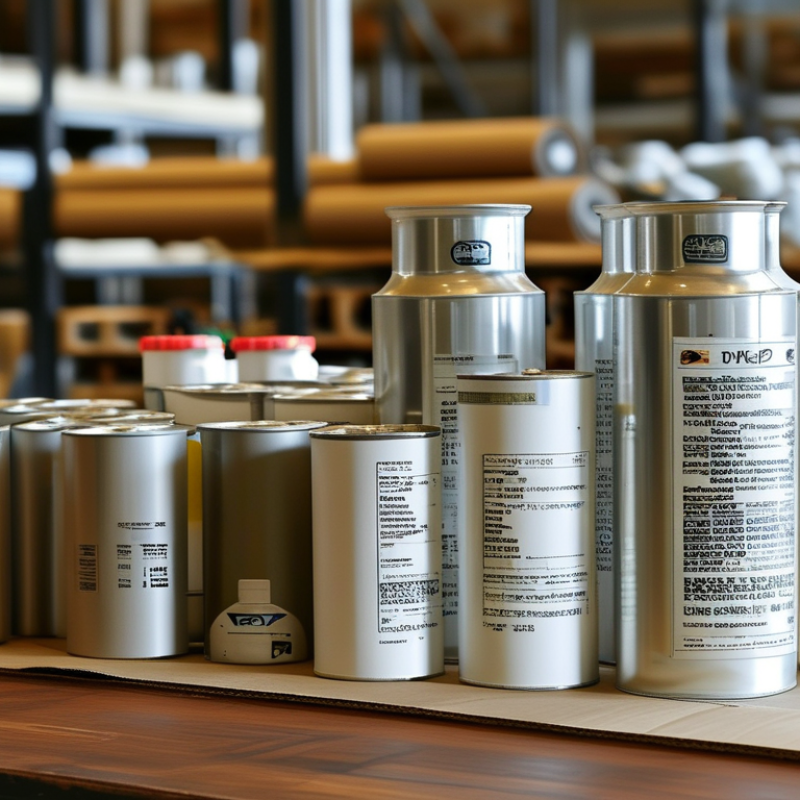
Shrink packaging rolls are continuous plastic films wound around a core for product wrapping. They are commonly made from polyolefin, polyethylene, or PVC, depending on the application. After a sleeve or bag is formed, controlled heat makes the film contract around the product. The result is a tight, clear layer that supports handling and reduces exposure to dust and moisture. Heat activates the film.
A reliable roll supplier should explain shrink ratio, film thickness, sealing temperature, and recommended machine settings. These details determine whether packages look smooth or develop wrinkles, holes, and weak seals. During trials, measure roll width, yield, transparency, and contraction at actual production speed. Do not judge quality from a sample alone. I have seen attractive samples perform poorly when storage conditions changed. That experience is easy to overlook.
When comparing suppliers in China, request a clear material specification and batch-level quality records. Ask how they control film thickness across the roll, since uneven gauge can disrupt feeding. Check core dimensions, winding tension, packaging protection, and delivery consistency. A technically strong supplier should provide test data, communicate limitations, and support controlled sampling. Be careful with vague claims about universal machine compatibility. Real packaging lines are rarely universal. A lower price may hide higher film consumption or more downtime. Review performance per packed unit, not only the roll quotation.
| Selection Dimension | What Shrink Packaging Rolls Are | How They Work | Typical Technical Data | What to Check When Choosing a Supplier |
|---|---|---|---|---|
| Definition | Continuous rolls of thermoplastic film used to wrap products, bundles, cartons, trays, or pallets. | The film is formed around the load and then heated. Its molecular orientation contracts, allowing the film to fit closely around the product. | Common roll formats include center-folded film, single-wound film, and flat film. Roll width and length vary according to the packaging machine and product size. | Confirm film format, roll dimensions, winding direction, core size, and compatibility with the packaging equipment. |
| Film Material | Common materials include polyolefin (POF), polyethylene (PE), and PVC. | Each polymer has different shrink behavior, sealing performance, clarity, strength, and environmental characteristics. | POF: clear, strong, commonly used for retail products. PE: thicker and tougher, suitable for bundles and pallet loads. PVC: good clarity and shrink performance, but increasingly restricted in some applications and markets. |
Request the resin type, safety documentation, technical data sheet, and compliance information for the destination market. |
| Typical Thickness | Film thickness is selected according to product weight, sharp edges, handling conditions, and required appearance. | Thicker films generally provide greater puncture and tear resistance, while thinner films can reduce material consumption when properly specified. | POF: commonly about 9–25 micrometres. PE: commonly about 30–150 micrometres for different load requirements. Actual ranges depend on film construction and application. |
Compare thickness tolerance, tensile strength, puncture resistance, seal strength, and film performance at the target thickness. |
| Shrink Ratio | Shrink ratio indicates how much the film can contract in the machine direction (MD) and transverse direction (TD). | When heated above its recommended shrink temperature, the oriented film contracts toward its original dimensions. | Many POF films provide approximately 50–75% shrinkage in MD and 15–65% in TD, depending on the grade and test method. PE commonly has lower shrinkage than highly oriented POF. | Ask for MD/TD shrink values, test temperature, test time, and test method. Match the shrink profile to the product shape and machine. |
| Shrink Temperature | The operating temperature range required to activate film shrinkage without damaging the package or product. | A heat tunnel or hot-air system transfers controlled heat to the film, causing contraction and tightening. | Many shrink films are processed with hot air in approximately the 120–200°C equipment range, but the correct film temperature and machine settings vary by material, thickness, speed, and package size. | Request recommended tunnel temperature, conveyor speed, air-flow settings, and sealing-window information. Confirm performance through machine trials. |
| Clarity and Gloss | Optical properties determine product visibility and shelf presentation. | A uniform film surface and controlled shrink process reduce haze, wrinkles, and uneven appearance. | POF is generally recognized for high clarity and gloss. PE is usually less transparent, especially at greater thicknesses. Appearance can also be affected by additives and processing conditions. | Evaluate haze, gloss, print quality, blocking, wrinkles, and appearance after shrinking on the actual product. |
| Seal Performance | The film must create a reliable seal after the package is formed. | A heated sealing bar, wire, or other sealing system melts or softens the film at the seal area, which then cools and bonds. | Important properties include seal initiation temperature, hot tack, seal strength, seal contamination tolerance, and seal-window width. | Check seal strength after cooling, seal leakage, burn-through risk, residue on sealing equipment, and suitability for the machine's sealing system. |
| Machine Compatibility | Shrink rolls are used with manual, semi-automatic, and automatic L-sealers, side-sealers, sleeve wrappers, and shrink tunnels. | The machine unwinds, cuts or seals, and heats the film at a controlled speed and temperature. | Compatibility depends on film format, roll width, maximum roll diameter, core diameter, machine speed, sealing method, and tunnel capacity. | Provide the machine model or complete specifications, including film width limits, core size, maximum roll diameter, and operating speed. |
| Strength and Protection | Film strength protects products from dust, moisture splash, abrasion, and minor handling damage. | After shrinking, the film applies a holding force around the product or bundle. | Key measurements include tensile strength, elongation, tear resistance, puncture resistance, dart impact, and holding force. | Select a grade based on product corners, load weight, transport distance, stacking conditions, and exposure to temperature changes. |
| Roll Construction | Film may be supplied as flat, single-wound, or center-folded rolls. | Center-folded film opens around the product, while flat film is used with equipment designed for separate film feeding or sleeve forming. | Critical specifications include lay-flat width, film thickness, roll length, roll diameter, core inner diameter, winding direction, and roll weight. | Check dimensional tolerances, telescoping, edge damage, roll hardness, splice frequency, and consistency between production batches. |
| Sustainability and Compliance | Environmental performance depends on polymer type, thickness, packaging efficiency, recyclability, and local collection systems. | Using the minimum effective thickness and avoiding unnecessary material can reduce packaging consumption, provided performance remains adequate. | POF and PE are plastic films with different recycling streams. Recycling availability varies significantly by country and local infrastructure. PVC requires separate consideration because of its chlorine-containing polymer structure. | Request material composition, recycled-content information where applicable, food-contact documentation if needed, and destination-market compliance declarations. |
| Quality Control | Consistent film quality is essential for stable packaging output. | Uniform thickness, shrink behavior, sealing, and roll winding help prevent film breaks, wrinkles, open seals, and machine stoppages. | Useful inspection items include thickness profile, width tolerance, shrink percentage, tensile properties, seal strength, coefficient of friction, optical properties, and roll appearance. | Ask for a certificate of analysis, batch traceability, inspection standards, retained samples, and a documented complaint-resolution process. |
| Supplier Evaluation | A suitable supplier should provide a film specification that matches the complete packaging process, not only a quoted price. | Reliable supply and technical support help maintain stable machine settings and reduce waste during production. | Compare material consistency, production capacity, lead time, minimum order quantity, customization options, packaging protection, and export documentation. | Request samples, conduct a production-line trial, compare total packaging cost per finished unit, and verify performance across multiple batches. |
| Best-Fit Starting Choice | For clear retail packs, a thin POF film is often a practical starting point. For heavy bundles or pallet stabilization, PE is often considered. | The best choice is determined by the product, equipment, required appearance, transport conditions, and applicable regulations. | There is no universal “best” shrink film. Film selection should be based on measured performance rather than material name alone. | Begin with a trial specification, test the complete film-machine-product combination, and finalize the order only after confirming seal quality, shrink appearance, throughput, and waste rate. |
Note: Technical ranges shown are typical industry reference values rather than universal specifications. Actual performance depends on film grade, additives, orientation, thickness, equipment, product geometry, and test conditions. Always verify the supplier’s current technical data sheet and conduct a production trial.