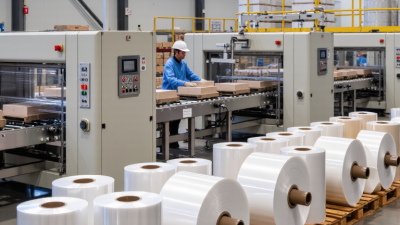
Who are the best POF Shrink Film suppliers in China? The answer depends on your product, packing line, and order volume. A supplier that works well for a small cosmetics brand may not suit a high-speed food-packing operation. The right comparison goes beyond a polished website or a low quoted price. It looks at film consistency, technical support, delivery reliability, and how clearly a supplier answers practical questions.
When assessing manufacturers, ask for specifications and sample rolls. Check how the film performs around corners, handles seals, and shrinks under your equipment’s settings. Ask how the supplier manages thickness variation and what quality checks it performs. Details matter. A smooth-looking sample is useful, but it cannot prove every production run will match. As a transparent editorial note, the following line is illustrative, not a verified quotation from a real person: packaging specialist Lin Wei might put it this way, “A good shrink film supplier proves consistency on the packing line, not just on paper.”
This guide compares Chinese POF Shrink Film suppliers through practical criteria, including product range, customization, communication, and support after delivery. It also considers the evidence buyers can request before placing an order. No single supplier is best for everyone. Even a careful shortlist can miss something; trial runs and clear specifications help reveal the gaps. The goal is a grounded starting point, not a perfect ranking.
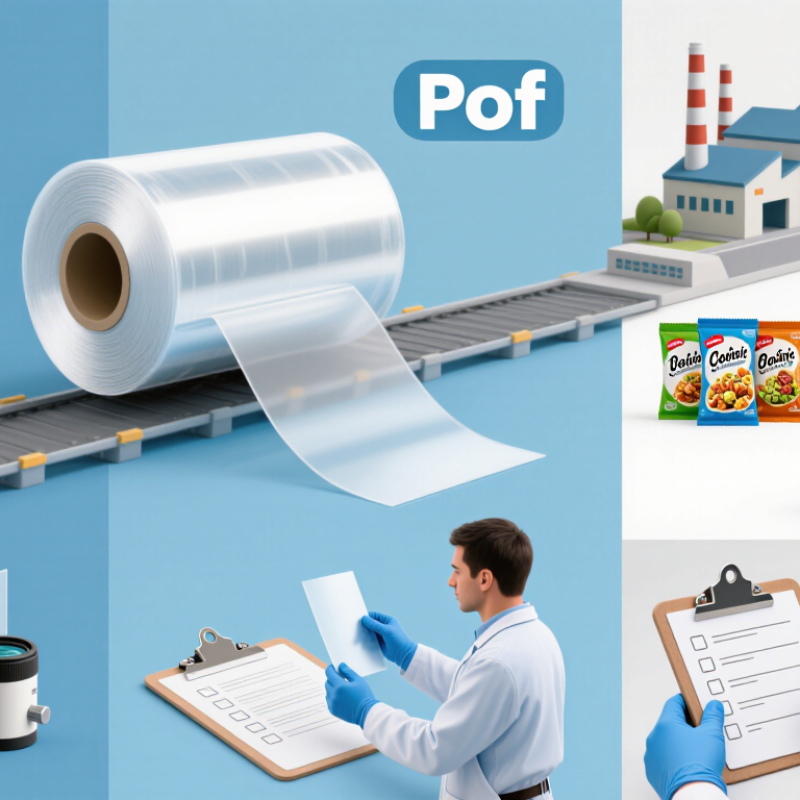
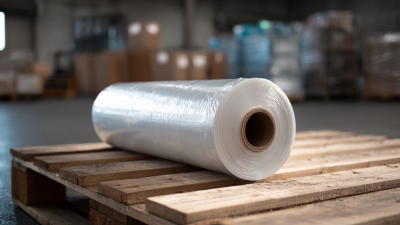
Polyolefin (POF) shrink film is made from polyolefin resins, commonly polyethylene and polypropylene. Many grades use co-extruded layers to balance clarity, flexibility, and seal strength. The film wraps a product, then contracts under controlled heat. Neat and clear. Typical uses include books, cosmetics, toys, food trays, and grouped retail items. The finished pack should fit snugly without obscuring labels or crushing delicate corners.
Gauge describes film thickness. POF is often supplied in 12–25 μm gauges. Around 12–15 μm may suit light, compact items, while thicker film can help with heavier packs or sharper edges. These are starting points, not fixed rules. Product shape, sealing equipment, tunnel temperature, and line speed all affect performance. A tidy sample can mislead; production testing may reveal weak seals or uneven shrinking. I would not choose by gauge alone. Ask suppliers for technical data and test samples on the actual packaging line. A little trial time can prevent cloudy finishes, loose corners, and avoidable film waste.

Polyolefin shrink film is commonly made as a multilayer coextruded film using polyolefin resins such as polyethylene and polypropylene. It is used to bundle and protect retail products, printed items, and multipacks. The gauge points shown are illustrative examples within the 12–25 μm range, not fixed specifications; the right thickness depends on the product, pack format, and packaging equipment.
For buyers comparing POF shrink film suppliers in China, the 50–70% shrinkage benchmark is a useful starting point. It commonly refers to shrink performance under controlled conditions around 120–150°C. It is not a guarantee for every film or packaging line. Ask whether the figure describes machine-direction shrinkage, transverse shrinkage, or both. The distinction matters.
A reliable supplier should provide test conditions, not just a headline percentage. Check film thickness, heating time, temperature, and measurement method. Then run a trial on your own equipment. A small boxed product and a tall bottle can respond differently, even at the same tunnel setting. Watch for loose corners, excessive film tension, and uneven seals. Details show performance.
The range is broad for a reason. Film formulation, gauge, load shape, and tunnel airflow all affect the result. That figure can mislead. Request samples from routine production, then test them at several temperatures within the stated range. Record shrinkage and package appearance together. A clean-looking pack at 135°C may matter more than a higher lab result at 150°C. Supplier data is useful, but your line provides the final evidence.
For POF shrink film suppliers in China, request recent ASTM D882 tensile test reports—not just a general product specification. ASTM D882 measures tensile properties of thin plastic sheeting. Ask for results in both machine and transverse directions, including tensile strength and elongation at break. These figures help reveal whether film may stretch unevenly or tear during sealing and shrinking. Check that the report identifies film thickness, sample conditioning, test date, and equipment calibration. Compare several production lots, not one carefully selected sample.
ISO 9001 controls matter, too. Ask for a valid certificate whose scope covers the actual manufacturing site, then check how the supplier handles lot traceability, inspection records, and corrective actions. ISO’s 2022 Survey reported 1,265,216 ISO 9001 certificates across 189 countries. That scale shows how widely the system is used; it does not prove that a particular film meets your requirements. A lot can look perfect. Still, a certificate alone cannot tell you how a factory responds when test results drift.
For a practical supplier review, request raw test data alongside the summary, plus a sample roll from a routine production run. Confirm that the roll’s measured gauge and tensile results match its paperwork. Ask how often testing is repeated and what happens when a result falls outside agreed limits. Small gaps matter. The paperwork may be tidy, while sample handling remains inconsistent; verify the details before approving repeat orders.
When comparing China’s POF shrink-film suppliers, ask for the stated thickness tolerance and the test method behind it. Request recent batch records, not just a product brochure. Check samples at several points across the roll; uneven gauge can cause loose corners or split seals on a fast packing line. Small differences matter. Compare monthly capacity against your film width, thickness, and order schedule, then confirm lead times with a trial order.
Food-contact suitability needs destination-specific evidence. Ask for a declaration covering the intended use, supporting migration-test results, and lot traceability. For example, suppliers serving relevant markets should be able to address applicable requirements such as FDA 21 CFR 177.1520 or EU Regulation 10/2011. OECD’s 2022 Global Plastics Outlook reports that packaging represented 40% of plastic waste generated in 2019. That is not a film-quality measure, but it underlines why material data and responsible sourcing deserve scrutiny. A neat certificate is not the same as a stable roll.
Tips: Request a certificate of analysis for each lot and keep a sealed sample. Compare its measured gauge, shrink behavior, and seal performance with your own line results. Paperwork is not proof. One practical gap: suppliers may test different locations or methods, so make the method part of the purchase specification.
| Comparison Dimension | Supplier A | Supplier B | Supplier C | How to Verify and Compare |
|---|---|---|---|---|
| Thickness range | Request the available gauges and confirm which are regularly produced. | Request the available gauges and confirm which are regularly produced. | Request the available gauges and confirm which are regularly produced. | POF shrink films are commonly offered in gauges such as 12, 15, 19, and 25 microns. Confirm availability for the specific film type and format; these are common options, not a guarantee that every supplier stocks them. |
| Thickness tolerance | Obtain the supplier’s written tolerance for the ordered gauge. | Obtain the supplier’s written tolerance for the ordered gauge. | Obtain the supplier’s written tolerance for the ordered gauge. | There is no single universal tolerance that applies to every POF order. Put the agreed tolerance in the purchase specification and verify it by measuring samples at multiple positions across and along the roll. |
| Production capacity | Request monthly capacity for the exact gauge, width, and film construction. | Request monthly capacity for the exact gauge, width, and film construction. | Request monthly capacity for the exact gauge, width, and film construction. | Compare capacity in tonnes per month or kilograms per month, then ask how much is available for your order after existing commitments. Request recent production records or an audit; capacity is supplier-specific and cannot be reliably inferred from a general industry figure. |
| Food-contact compliance | Request declarations and test reports for the intended market and use. | Request declarations and test reports for the intended market and use. | Request declarations and test reports for the intended market and use. | For EU use, check the applicable requirements of Regulation (EU) No 10/2011 and request a Declaration of Compliance and relevant migration evidence. For U.S. use, confirm that each applicable material and intended condition of use is covered by the relevant FDA requirements, which may include 21 CFR 177.1520. Verify the current Chinese food-contact requirements when selling in China. |
| Film construction and format | Confirm whether the quotation is for center-folded, single-wound, or another format. | Confirm whether the quotation is for center-folded, single-wound, or another format. | Confirm whether the quotation is for center-folded, single-wound, or another format. | Compare like with like: film construction, roll width, roll length, core size, perforation (if required), and whether the quoted thickness applies to the flat film or the finished format. |
| Shrink performance | Request a technical data sheet and samples for machine trials. | Request a technical data sheet and samples for machine trials. | Request a technical data sheet and samples for machine trials. | Ask for shrink performance by direction and test conditions, including temperature and exposure time. Validate on the customer’s own packaging line because results depend on the film, package, and equipment settings. |
| Quality-control evidence | Request batch inspection records and the sampling method. | Request batch inspection records and the sampling method. | Request batch inspection records and the sampling method. | Check that records identify the production batch and include the agreed critical properties, such as thickness, width, appearance, and relevant performance results. |
| Lead time and supply reliability | Request a written lead time and production schedule for the order quantity. | Request a written lead time and production schedule for the order quantity. | Request a written lead time and production schedule for the order quantity. | Compare quoted lead time, order minimum, repeat-order arrangements, and contingency plans. Confirm whether the lead time includes production, inspection, and export preparation. |
| Supplier comparison status | Supplier-specific data not independently verified here. | Supplier-specific data not independently verified here. | Supplier-specific data not independently verified here. | This table provides a due-diligence framework, not verified ratings or performance claims about individual Chinese manufacturers. Request current, order-specific documents and independently validate critical claims before purchasing. |
To rank Chinese POF shrink-film suppliers, test comparable samples before comparing quotations. Record film thickness, shrink response, seal strength, and haze under the same settings. ASTM D2732 measures free shrink; ASTM D882 covers tensile properties. A sample that runs cleanly on your actual machine matters more than a polished datasheet. Small trials can mislead, though. Check more than one roll.
Score suppliers on sample performance, lead time, service, and total cost. One practical model assigns 35%, 25%, 20%, and 20%, respectively; adjust the weights to fit your line. Track quoted versus actual delivery dates across repeat orders, not one shipment. The Flexible Packaging Association’s 2023 State of the U.S. Flexible Packaging Industry Report estimated 2022 sales at $42.9 billion, showing the scale of this packaging sector, not the quality of any single supplier. Ask for clear responses on specifications, defects, and replacement plans. Then compare landed cost, including freight, scrap, and line stoppages. Cheap film can become expensive. A tidy scorecard still cannot capture every rushed changeover, so keep trial notes and revisit the ranking after production runs.