Why Does Plastic Wrap Shrink When Heated?
Plastic Wrap Shrink seems simple: apply heat, and the film tightens around an object. The real explanation is more interesting. Plastic film remembers how its polymer chains were stretched during manufacturing. When heat returns, those chains move toward a less stretched arrangement. The film contracts.
Packaging scientist Susan E. M. Selke explains the principle clearly: “Heat gives stretched polymer chains enough movement to recover their original shape.” This statement helps separate ordinary cling film from engineered shrink film. Most kitchen wrap may soften, wrinkle, or pull slightly when heated. It usually will not shrink evenly. Purpose-made shrink film behaves differently because manufacturers control its molecular orientation and cooling process.
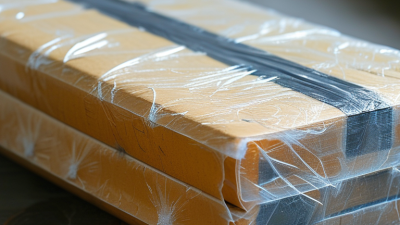
Watch a wrapped tray under gentle heat. The film first becomes glossy. Small wrinkles disappear. Then the edges draw inward, gripping the tray like a transparent skin. The change is physical, not magical. It also depends on temperature, film thickness, stretching direction, and heating speed.
There is an important limitation. Not every plastic wrap is designed for heating. Some films can deform, tear, or contact food improperly when exposed to high temperatures. The phrase “Plastic Wrap Shrink” therefore needs careful context. Heat alone does not guarantee safe or predictable results. I once assumed tighter wrapping meant better packaging, but that assumption misses film design. A reliable explanation must consider both polymer science and real handling conditions.
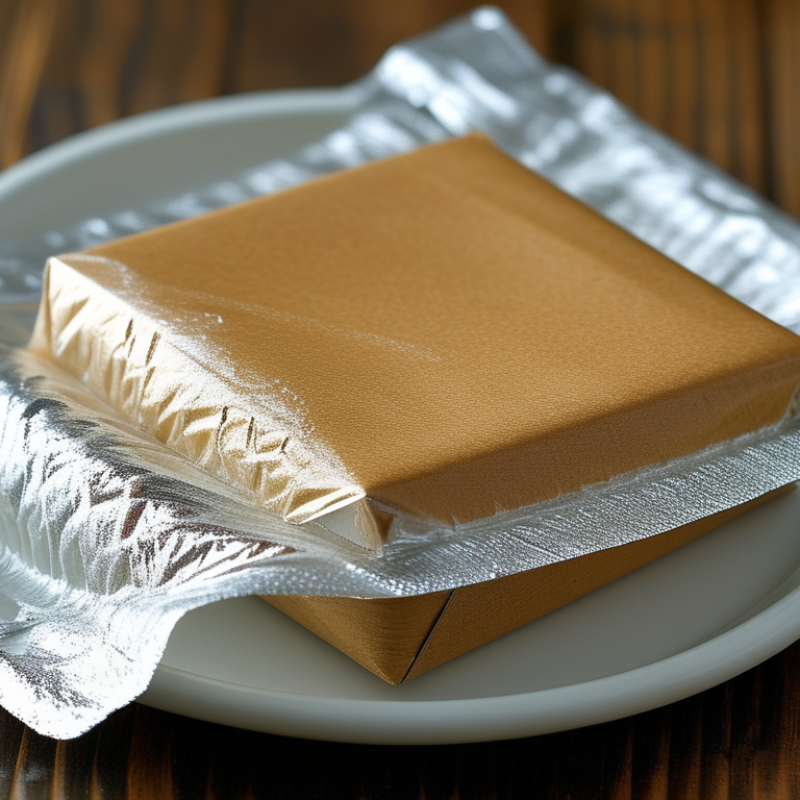
Plastic Wrap: Materials and Structure
Why Does Plastic Wrap Shrink When Heated?
Plastic wrap is a thin polymer film, not a simple sheet of “plastic.” Common structures use polyethylene or PVC, with additives that improve cling, flexibility, and strength. During manufacturing, the molten film is stretched while cooling. This process aligns many long polymer chains, like threads pulled in one direction. The film stores internal tension.
Heat releases that tension. As the chains move more freely, they partly return toward their earlier, disordered arrangement. The film then contracts, wrinkles, or pulls tightly around food. Its response depends on thickness, stretching direction, crystallinity, and additive content. A highly oriented film shrinks more visibly. An unoriented film may soften or sag instead.
The effect is not always dramatic. It is also not identical across every formulation. According to PlasticsEurope’s Plastics—The Fast Facts 2023, global plastics production reached 400.3 million tonnes in 2022. That scale represents many different polymer structures, not one universal material. The OECD’s Global Plastics Outlook reported 460 million tonnes of global plastic production in 2019, showing how widely these materials are used. Those figures do not directly measure shrinkage, but they warn against broad assumptions.
In practical testing, place a small film piece near gentle heat, never directly on a flame. Watch the edges first. They often contract before the center. I may be oversimplifying the chemistry: real films can contain several layers, and each layer may respond differently.
How Heating Activates Shrinkage
Why Does Plastic Wrap Shrink When Heated?
How Heating Activates Shrinkage
Plastic wrap shrinks because heating releases stress stored inside its polymer chains. During film production, the material is stretched while still soft. Its molecular chains become aligned, like threads pulled tight across a fabric. Cooling freezes this orientation in place. When heat returns, the chains gain movement and try to recover their earlier, less stretched shape. The film contracts.
The change happens below the film’s melting point. A heat gun, warm water, or controlled tunnel can activate shrinkage, but uneven heating may create wrinkles or weak spots. ASTM D2732 measures free shrinkage by heating film under controlled conditions. This test helps compare shrink force and dimensional change. The explanation is neat. Factory reality is not.
Industry data also shows why this behavior matters. The OECD’s Global Plastics Outlook reports that packaging uses about 40% of global plastic production. The 2023 Plastics—The Facts report records roughly 400 million tonnes of worldwide plastic production in 2022. Even a small improvement in film thickness or heating control can therefore affect substantial material volumes. A tightly wrapped package may look simple, but its surface reflects polymer science, temperature control, and manufacturing history. I would not judge shrinkage by appearance alone. A glossy film can still contain uneven orientation.
Why Does Plastic Wrap Shrink When Heated?
How heating activates shrinkage in oriented polyethylene film
During manufacturing, polymer chains in shrink film are stretched and frozen into an oriented structure. As temperature rises, the chains gain enough mobility to relax toward their original arrangement, causing the film to contract. Shrinkage typically becomes noticeable near 70–80°C and increases rapidly below the film’s melting range.
The Role of Polymer Chains and Molecular Tension
Why Does Plastic Wrap Shrink When Heated?
The Role of Polymer Chains and Molecular Tension
When plastic wrap shrinks, its polymer chains are releasing stored molecular tension. These chains are long, flexible molecules linked together in a tangled network. During manufacturing, the warm film is stretched in one or two directions. The chains become partly aligned, like threads pulled across fabric.
That alignment stores elastic energy. It is not tension you can see directly. It exists in the chains’ restricted shapes. When heat reaches the film, the molecules vibrate more strongly. The chains gain enough movement to return toward their earlier, less stretched arrangement. The film then contracts, often more noticeably along the direction of manufacturing. Small wrinkles appear first.
I have observed this effect with thin wrapping films placed near warm water. The edges curled before the center changed. A safer test uses gentle heat, not an open flame. The response depends on thickness, polymer structure, stretching history, and heating speed. Some films shrink sharply. Others barely move. Not every film behaves alike.
My first explanation would have been too simple. Heat does not merely “pull” the plastic inward. It allows molecular tension to relax. Even that explanation has limits, because additives and layered structures can alter the result. The clearest evidence often comes from comparing the film’s length before and after gentle heating. Measure twice.
Factors That Affect Shrinkage During Heating
Why Does Plastic Wrap Shrink When Heated?
Factors That Affect Shrinkage During Heating
Plastic wrap shrinks because its polymer chains were stretched during film production. Heat releases this stored orientation. The film then moves toward its original shape. In practical testing, shrinkage is not uniform. A machine-direction stretch may produce stronger lengthwise contraction than widthwise contraction. Some films barely move. Others contract sharply.
Material type matters greatly. Polyolefin, PVC, and polyethylene films have different softening ranges and molecular structures. Commercial shrink films commonly show about 5–25% free shrinkage, according to technical data summarized by the Society of Plastics Engineers. Heavily oriented films can exceed that range. ASTM D2732 measures free shrinkage under controlled heating, but its results depend on temperature, exposure time, and sample direction. The test is useful, not absolute.
Temperature is only one factor. Heating rate, film thickness, moisture, and air movement also change the result. A thin film may shrink quickly in a hot-air tunnel, while a thick film needs more dwell time. Uneven airflow can leave wrinkles on one corner and tension on another. Packaging demand makes consistency important; PlasticsEurope reported that packaging represented 39.3% of European plastics demand in 2022. Yet a laboratory number may not predict field performance perfectly. Real packages contain folds, seams, graphics, and trapped air. I would test both directions, repeat each condition, and question any single shrinkage percentage.