Top 10 Stretch Film Suppliers at the 139th Canton Fair?
The 139th Canton Fair is set to showcase the latest advancements in various industries, with a significant focus on Stretch Film suppliers. Stretch Film, widely used in packaging and logistics, plays a crucial role in protecting products during transit. According to industry data, the global stretch film market is projected to grow at a CAGR of 4.5% from 2023 to 2028, highlighting its importance.
At the upcoming fair, visitors can expect to meet top suppliers, showcasing innovative solutions and sustainable materials. The introduction of AI tools will aid buyers in finding vendors meeting specific certifications like ISO and CE. This feature might enhance decision-making but also poses challenges in terms of dependency on technology for supplier evaluation.
As demand for Stretch Film continues to rise, companies must consider environmental impacts. Are current production methods sustainable? The ongoing dialogue within the industry indicates a need for improvements. The Canton Fair provides an excellent opportunity for reflection and collaboration among stakeholders, striving for a balanced approach to innovation and sustainability.

Top Global Stretch Film Suppliers Exhibiting at the 139th Canton Fair
The 139th Canton Fair is an exciting opportunity for global stretch film suppliers to showcase their products. Stretch film is crucial in packaging, providing stability and protection for various goods. The global stretch film market is projected to reach $10 billion by 2025, growing at a compound annual growth rate (CAGR) of 5.6%. This significant growth emphasizes the demand for high-quality packaging solutions.
During the fair, suppliers will present innovative technologies. Some films are engineered for specific industries, such as food and pharmaceuticals. The right stretch film can enhance product preservation and reduce waste. However, there’s an ongoing challenge with the environmental impact of plastic packaging. Many companies are exploring biodegradable alternatives but face hurdles in scalability and cost.
In a competitive market, suppliers must adapt quickly. Attending the Canton Fair allows them to gauge market trends and consumer preferences. Not all exhibitors are prepared for such insights. Some may still rely on traditional methods rather than embrace new technologies. Adjusting to consumer needs is essential for sustained growth in this dynamic industry.
Top 10 Stretch Film Suppliers at the 139th Canton Fair
| Rank |
Country |
Production Capacity (tons/year) |
Annual Revenue (USD) |
Years in Business |
| 1 |
USA |
15000 |
7500000 |
20 |
| 2 |
Germany |
12000 |
6500000 |
25 |
| 3 |
China |
20000 |
9000000 |
15 |
| 4 |
Italy |
10000 |
5000000 |
18 |
| 5 |
Japan |
9000 |
4800000 |
30 |
| 6 |
India |
8000 |
3500000 |
12 |
| 7 |
Brazil |
7000 |
3000000 |
10 |
| 8 |
France |
6000 |
2800000 |
22 |
| 9 |
UK |
6500 |
4000000 |
16 |
| 10 |
South Korea |
5500 |
2500000 |
14 |
Market Share Analysis of Leading Stretch Film Manufacturers in 2023
In 2023, the global stretch film market showcased a substantial rise, reflecting increasing demand in various sectors. The market size reached approximately $10 billion, driven by e-commerce and retail packaging. North America and Asia Pacific are the largest regions, accounting for over 50% of the total market share. This growth presents an opportunity but also a challenge for manufacturers.
Leading stretch film manufacturers focus on sustainability. Many are shifting towards biodegradable materials. This transition is not without difficulty. Suppliers face higher production costs and require investment in new technologies. However, those that adapt are likely to capture a larger market share. The push for eco-friendly solutions sets the industry apart but also invites scrutiny regarding implementation.
Moreover, advancements in production techniques are vital. Innovations such as automated systems are driving efficiency. But some companies struggle with integration. There’s a notable gap between those leading the charge and those lagging behind. The disparity raises questions about long-term viability in a competitive landscape. Tracking these trends will be crucial for suppliers aiming to sustain growth amid evolving consumer preferences.
Innovative Stretch Film Technologies Presented by Top Suppliers
At the 139th Canton Fair, innovative stretch film technologies took center stage. Suppliers showcased advancements that enhance performance and sustainability. The global stretch film market is projected to grow at a compound annual growth rate of 4.9% from 2021 to 2026, according to industry reports. This growth reflects an increasing demand for efficient packaging solutions across multiple sectors.
One highlight was the introduction of biodegradable stretch films. These environmentally friendly options are crucial as more companies strive for sustainability. Traditional plastic films often end up in landfills. The new technologies offer a solution, though challenges remain in terms of cost and industrial adoption. Suppliers acknowledged the importance of balancing innovation with economic feasibility.
Tips: When choosing stretch film, consider factors like clarity, stretchability, and resistance to punctures. These aspects directly influence the effectiveness of your packaging. Regular evaluations of your film choices can also lead to better operational efficiency. Adopting new technologies may require adjustments but can yield substantial benefits in the long run.
Embrace the learning curve.
Sustainability Trends Among Stretch Film Suppliers at the Canton Fair
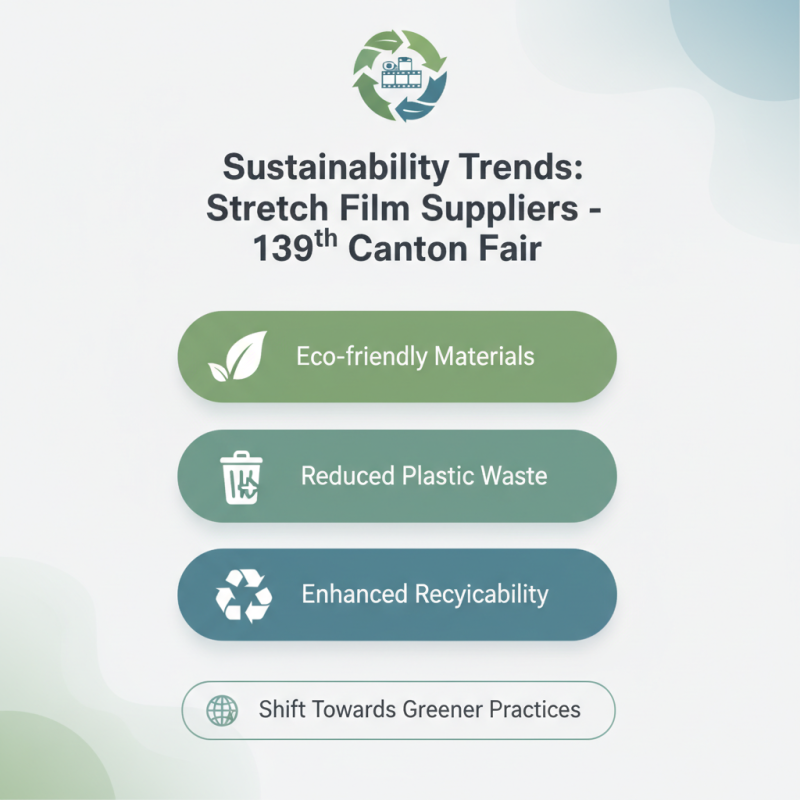
Sustainability is reshaping the stretch film industry, especially at trade events like the 139th Canton Fair. Many suppliers are exploring eco-friendly materials. They focus on reducing plastic waste and enhancing recyclability. These initiatives signal a shift towards greener practices.
Some suppliers showcased innovative products made from biodegradable materials. Their goal is to decrease environmental impact. However, challenges remain. Not all biodegradable films perform well under industrial conditions. There is a need for improvement and rigorous testing. Addressing these issues is crucial for gaining wider acceptance.
Additionally, the conversation around recycling systems is gaining traction. Suppliers are collaborating with local communities to enhance recycling efforts. Yet, many face hurdles in logistics and education. Sustainable practices require collective effort, and there is much room for reflection and growth. The journey toward sustainability for stretch film suppliers is ongoing.
Comparative Review of Stretch Film Quality and Pricing from Top Exhibitors
The 139th Canton Fair showcased numerous stretch film suppliers, revealing significant variations in quality and pricing. Recent industry reports indicate that the global stretch film market is projected to reach $10 billion by 2026, fueled by rising demand from packaging industries. However, not all suppliers meet the same quality standards.
Comparative analysis suggests that the chemical composition of stretch films plays a crucial role in their performance. Films produced with higher polyethylene clarity show better tensile strength and puncture resistance. Research indicates that films with a thickness of 17-20 microns are often favored for optimal balancing of cost and functionality. Yet, some exhibitors offered subpar films in this range at competitive prices, raising questions about long-term value and sustainability.
Moreover, pricing strategies widely varied among top exhibitors. Some suppliers adopted a low-cost approach, but quality sacrifices could lead to increased spoiling and waste over time. While affordability is appealing, it is important to assess whether the lower price aligns with the expected quality. The challenge remains for businesses to find a reliable supplier who balances cost and superior product performance effectively.