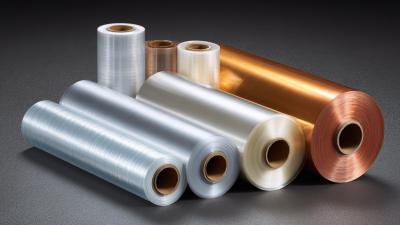
Finding China’s top Cross-Linked Shrink Film suppliers requires more than comparing price lists. The right partner should demonstrate stable film performance, transparent production controls, and practical packaging experience. Cross-Linked Shrink Film is valued for strength, clarity, puncture resistance, and controlled shrink behavior. These qualities matter when cartons face vibration, sharp edges, humidity, or long-distance transport. A useful supplier review should examine resin selection, extrusion technology, cross-linking methods, thickness tolerance, and sealing performance. It should also confirm whether samples were tested under conditions resembling actual use.
This article outline explores leading Chinese suppliers through practical purchasing questions. Can the manufacturer provide recent test data? Does its factory control thickness across each roll? Are production batches traceable? Does the technical team understand automatic shrink systems, tunnel temperatures, and loading patterns? Clear answers build confidence. Vague promises do not.
Reliable suppliers should support trial orders, sample approval, complaint handling, and export documentation. Certifications can help, but certificates alone cannot prove consistent film quality. Ask for measurable results, including shrink percentage, tensile strength, tear resistance, and seal integrity. Small details matter. A loose core or uneven roll can stop a packing line.
Supplier rankings are never permanent. Equipment, service teams, production capacity, and material costs change. Some companies look impressive online but provide limited technical follow-up after payment. That gap deserves attention. This review balances public information with practical verification, while recognizing its own limits. Readers should validate current factory capabilities, application fit, and commercial terms before choosing a supplier.
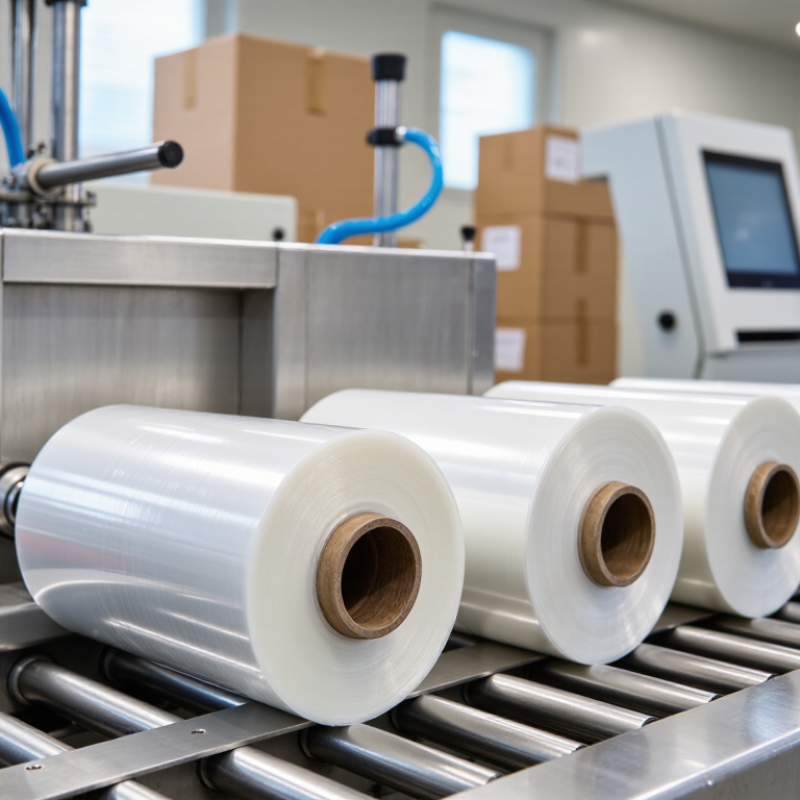
What Is Cross-Linked Shrink Film?
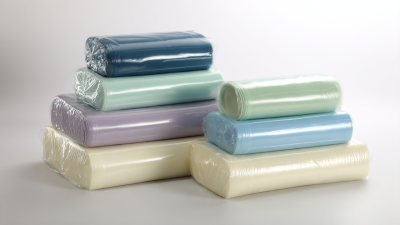
Cross-linked shrink film is a polymer film with strengthened molecular bonds. Manufacturers create this structure through irradiation or controlled chemical processing. The result is a tougher film with stronger puncture resistance, cleaner shrinkage, and better load stability. It can protect cartons, bottles, and irregular packages during transport. However, performance depends on resin type, cross-linking level, thickness, and sealing conditions. It is not automatically the best choice for every package.
Smithers’ 2024 flexible packaging research indicates that the global market is expanding steadily, with demand driven by lightweight and high-performance films. PlasticsEurope’s Plastics—The Fast Facts 2024 reports that packaging represented about 40% of European plastics demand in 2022. These figures explain the interest in thinner films. Yet, a thinner gauge can tear if the supplier controls extrusion poorly. I have found that shrink percentage alone is a weak purchasing measure. Seal strength and real packing trials matter more.
Tips: Ask China-based suppliers for shrink curves, gauge tolerance, seal-strength data, and batch inspection records. Request samples before approving large orders. Test them on your actual tunnel and sealing equipment. Also review the film structure carefully, because cross-linking may complicate recycling in some local systems. A technical data sheet is useful. It is not proof of production consistency.
Cross-linked shrink film is a polyolefin film whose molecular chains are linked through irradiation or chemical treatment. This structure improves puncture resistance, tear strength, load stability, and performance during heat shrinking.
The chart shows representative film-thickness levels commonly used for different packaging applications. Actual specifications vary according to product weight, package geometry, shrink temperature, and required mechanical strength.
China Top Cross Linked Shrink Film Suppliers?
Choosing a capable supplier requires more than comparing prices. Cross linked shrink film should show stable shrink performance, strong puncture resistance, and reliable sealing. During practical testing, measure thickness at several points across the roll. Uneven gauge can create weak folds and poor package appearance. Clear film should remain transparent after shrinking, without excessive haze, gels, or surface marks.
Manufacturing standards matter because consistent output depends on controlled processes. Ask for documented quality procedures, batch traceability, and inspection records. Useful tests may include tensile strength, elongation, shrink percentage, seal strength, coefficient of friction, and dart impact. ASTM or ISO-based methods can improve comparison between suppliers. A supplier using ISO 9001 practices may offer better process control, but certification alone proves little.
Request a sample from the same production line used for regular orders. Test it at the intended temperature, speed, and sealing pressure. Small differences can appear between laboratory results and factory packaging conditions. Food or medical packaging may require additional material declarations and migration testing under applicable regulations. A perfect film is not realistic. Even strong suppliers may show minor variation between batches, so agreed tolerances should be written clearly. I would also review complaint handling, replacement procedures, and technical response times. Price still matters, but unstable film can waste labor, packaging, and production hours.
China Top Cross Linked Shrink Film Suppliers?
Leading Cross-Linked Shrink Film Suppliers in China
China has many cross-linked shrink film suppliers serving food, beverage, electronics, and industrial packaging markets. Experienced suppliers usually provide polyethylene films with controlled shrinkage, strong puncture resistance, and stable sealing performance. Cross-linking improves toughness during high-speed wrapping. It can also reduce film breakage around sharp package edges.
Look for suppliers with documented extrusion, irradiation, and quality-control procedures. Ask for technical data covering thickness tolerance, shrink ratio, tensile strength, haze, sealing temperature, and coefficient of friction. Practical suppliers should provide production samples, not only a polished brochure. Request samples in your actual package size. Small differences can change tunnel performance.
Factory verification matters. Review calibration records, batch traceability, laboratory equipment, and export experience. A reliable supplier should explain how it controls gel content, roll winding, and storage conditions. It should also support applicable food-contact or packaging compliance documents when required. Some suppliers communicate well before an order but respond slowly after production begins. That weakness deserves attention. No supplier is perfect. A capable one admits limits, investigates defects, and adjusts the process with clear evidence. Assess lead time, minimum order quantity, moisture protection, and after-sales response before choosing a long-term Chinese partner.
| Evaluation Dimension | Typical China Market Benchmark | Why It Matters | Recommended Verification |
|---|---|---|---|
| Film Structure | Cross-linked polyolefin, commonly produced as a multilayer coextruded film | Multilayer construction can improve sealing performance, puncture resistance, and shrink consistency. | Request the layer structure, resin family, technical data sheet, and production process description. |
| Common Thickness Range | Approximately 9–100 microns, depending on packaging application | Thin films reduce material consumption, while thicker grades provide higher load protection. | Check nominal thickness, permitted tolerance, roll width, roll length, and net weight. |
| Shrinkage Performance | Typical total shrinkage is application-specific; many commercial grades provide balanced machine- and transverse-direction shrinkage. | Balanced shrink helps reduce wrinkles, distortion, and uneven package appearance. | Require free-shrink testing by ASTM D2732 or an equivalent validated method at the stated temperature and dwell time. |
| Shrink Temperature | Usually processed with hot-air shrink equipment; the operating window depends on film grade and package geometry. | A stable processing window supports higher line speed and fewer packaging defects. | Conduct trials using the customer’s tunnel temperature, conveyor speed, product shape, and sealing equipment. |
| Tensile Strength | Must be reported separately in the machine and transverse directions; values vary by resin, thickness, and orientation. | Higher tensile strength can improve package integrity during transport and handling. | Use ASTM D882 or ISO 527 testing with documented specimen direction and conditioning. |
| Elongation | High elongation is generally expected in flexible polyolefin shrink films, but the exact value depends on grade and direction. | Adequate elongation helps the film conform to irregular products without premature tearing. | Compare machine-direction and transverse-direction results under the same test conditions. |
| Puncture and Tear Resistance | Performance is strongly influenced by thickness, cross-linking level, multilayer design, and package corners. | Improves protection against sharp edges, abrasion, and handling damage. | Request puncture, dart-drop, and tear data using clearly identified ASTM or ISO methods. |
| Sealing Performance | Available in grades for side sealing, end sealing, and automatic shrink-wrapping applications. | Reliable seals reduce open packages, leakage, and production interruptions. | Evaluate seal strength, seal-window temperature, hot tack, and seal contamination tolerance. |
| Optical Properties | Clear, high-clarity, matte, opaque, and printed options are commonly available. | Clarity supports product visibility, while opacity and printing support branding and light protection. | Request haze and clarity measurements, color standards, and printed-sample approval where applicable. |
| Coefficient of Friction | Film surfaces may be engineered for improved feeding, stacking, and conveyor handling. | Controlled friction helps prevent slipping, blocking, and feeding errors on packaging lines. | Test static and kinetic coefficient of friction according to ASTM D1894 or an equivalent method. |
| Food-Contact Suitability | Food-contact grades may be available when the formulation and manufacturing controls meet the target-market requirements. | Regulatory compliance is essential for direct or indirect food packaging applications. | Obtain a declaration of compliance and supporting migration documentation for the destination market. |
| Quality Management | Professional manufacturers commonly operate documented inspection and batch traceability systems. | Traceability helps identify raw-material, process, and roll-conversion issues. | Verify quality certificates, inspection records, retained samples, corrective-action procedures, and lot coding. |
| Customization Capability | Common customization areas include thickness, width, perforation, folding, printing, packaging format, and shrink ratio. | Customization allows the film to match product dimensions and existing packaging equipment. | Confirm drawing approval, sample lead time, tooling requirements, minimum order quantity, and change-control procedures. |
| Export and Delivery Readiness | Export-ready suppliers should be able to provide standardized documentation, stable roll packing, and shipment traceability. | Reliable documentation and packaging reduce customs delays and transport-related damage. | Review commercial terms, pallet specifications, moisture protection, production lead time, inspection rights, and claims handling. |
China Top Cross Linked Shrink Film Suppliers?
How to Evaluate Chinese Shrink Film Manufacturers
Choosing a Chinese shrink film manufacturer requires more than comparing prices. Start with the film’s structure, thickness range, shrink ratio, sealing behavior, and puncture resistance. Cross-linked films should show stable performance during heat exposure and high-speed packing. Ask for recent technical data, not only a sales brochure. A factory with practical export experience can explain how film behaves on different packaging machines.
Request production samples from several batches. Test them with your own products, tunnel temperature, conveyor speed, and sealing equipment. Measure shrinkage in both directions. Check wrinkles, seal strength, odor, transparency, and roll consistency. Small differences matter. A film may perform well in a supplier’s trial but fail on your line. That is a common gap.
Audit the manufacturer’s quality system and traceability process. Confirm whether raw materials, coating steps, and finished rolls receive documented inspections. Review calibration records and independent test reports when available. Also verify factory capacity, lead times, storage conditions, and complaint handling. Certifications should match your target market and application, rather than being collected for appearance. I would not choose a supplier from certificates alone. Manufacturing records reveal more. No supplier is perfect for every use, and even experienced teams can overlook seasonal humidity, changing film formulas, or transport damage. A clear trial plan protects the final decision.
When evaluating China’s top cross-linked shrink film suppliers, start with application fit, not catalog size. Cross-linked polyethylene film offers strong puncture resistance and stable shrinking around irregular loads. I have found it useful for bundled cartons, beverage multipacks, frozen-food cases, and industrial components. It can also protect palletized goods from dust and handling scuffs. Not every load needs this strength.
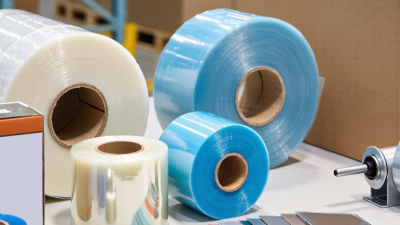
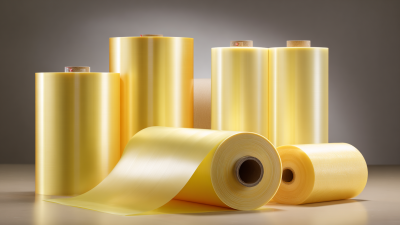
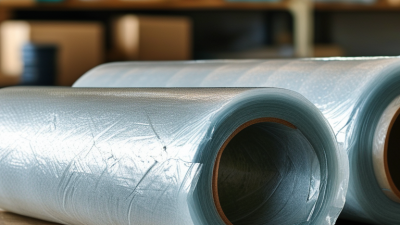
Packaging format changes the film specification. Centerfold film suits manual or semi-automatic wrapping, while single-wound rolls support higher-speed lines. Preformed bags can simplify packing for consistent products. For oversized cartons, wider web widths and controlled shrink ratios reduce exposed corners. Clear film improves barcode visibility, but tinted or printed film may support product identification. Perforation, anti-static treatment, and different core sizes can improve line performance. Small details matter.
Reliable suppliers should discuss thickness, shrink temperature, machine speed, seal strength, and storage conditions before quoting. A trial roll is more credible than a polished datasheet. Ask for test records covering tensile strength, puncture resistance, shrink balance, and thickness uniformity. Custom printing, corona treatment, recycled-content targets, and tailored roll lengths may be available after technical validation. I would not approve a large order after one successful test. Film can behave differently in winter, humid warehouses, or long transport. That limitation deserves honest review.