
Cross-Linked Shrink Film is engineered to tighten around products when heated, creating a close, stable package. Its performance depends on more than a glossy finish. Resin selection, cross-linking method, film gauge, and sealing conditions all influence strength and shrink behavior. A carton wrapped on a fast-moving line may need different properties from a bundle of bottles exposed to repeated handling.
For a polymer-science perspective, this guide draws on the work of Dr. George Wypych, a polymer chemist and author of reference books on polymers. The following is an editorial paraphrase, not a verbatim quotation: “Film performance begins with its structure, then proves itself in processing and use.” That distinction matters. A specification sheet can describe puncture resistance or shrink force, but production trials reveal whether film feeds smoothly, seals cleanly, and keeps corners tight. Small differences show up quickly.
This Top 10 overview compares manufacturers by product range, technical support, documented specifications, and suitability for different packaging needs. It also considers practical details, such as available gauges, roll formats, and compatibility with common shrink equipment. Not every supplier fits every line. A lower price may look attractive until film breaks interrupt a shift; even so, premium film is not automatically the better choice. Buyers should confirm claims with current technical data and controlled trials using their own products. The ranking is a starting point, not a substitute for testing.
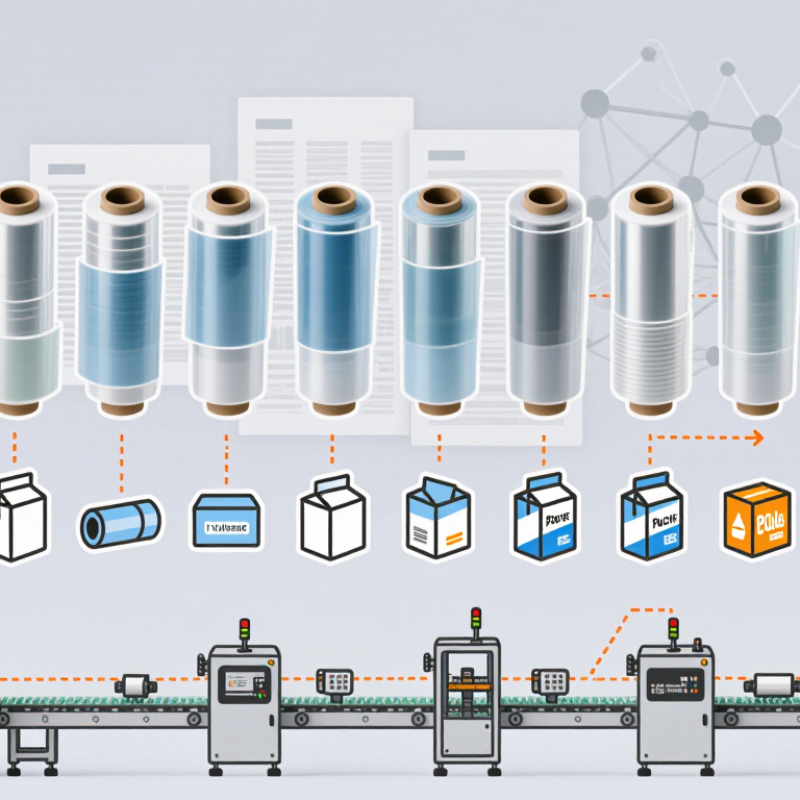
Cross-linked shrink film gets its name from polymer chains joined into a network during processing. The added links help the material hold together when heated and stretched. In a shrink tunnel, it tightens around a product instead of simply melting or sagging. The film can be clear and glossy, with useful resistance to tears and punctures. It is not indestructible, though; sharp corners still need attention.
These properties suit multipacks, retail bundles, and trays of packaged goods. A thin film can provide a snug wrap, reducing loose edges that catch during handling. Cross-linking may also support consistent shrinking across a package, but results depend on film thickness, seal quality, and tunnel settings. Too much heat can distort a pack. Too little leaves wrinkles. Small production trials matter.
Tips: Check seals and shrink performance on the actual package, not just a flat sample. Look closely at corners and seams. A slightly cloudy finish or uneven tension can be easy to overlook at first.

A useful assessment of cross-linked shrink film manufacturers starts with process control, not polished sales claims. Ask how each producer manages film thickness, cross-linking levels, and shrink performance across production runs. Request recent test data for shrink force, clarity, seal strength, and puncture resistance. Small variations matter: a few microns can affect how tightly film fits a carton or how reliably it runs on a packaging line.
Look for documented quality checks and traceable production records. Strong suppliers can explain their sampling methods, test conditions, and responses to out-of-spec results. They should also provide practical guidance on film gauge, roll width, and machine settings for a buyer’s actual application. Ask about trial rolls and technical support during line testing. A specification sheet is useful, but it cannot show every wrinkle, split, or loose corner that appears at operating speed.
Capacity and delivery reliability deserve equal attention. Compare stated output with lead times, order flexibility, and the ability to maintain consistent specifications between lots. Request references or evidence relevant to similar packaging demands, while recognizing that performance may differ by equipment and product shape. No scorecard is perfect. A manufacturer’s answers can sound precise yet leave gaps; note what remains unclear, and verify it with a controlled production trial.
Profiles of 10 Cross-Linked Shrink Film Manufacturers
A useful profile begins with what a plant actually makes. One manufacturer may specialize in high-volume polyolefin film, while another focuses on narrow custom widths. A third may offer multilayer structures for improved puncture resistance. A fourth may prioritize consistent gauge across wide rolls. A fifth may develop film for clear retail displays. Small details matter.
The remaining profiles reveal different strengths: one producer may focus on industrial bundling; another, on food-packaging applications. An export-oriented manufacturer may support several regional markets, while a local converter may offer shorter lead times. A technically focused plant may help customers tune shrink temperature and sealing settings. The tenth profile should make its testing and documentation easy to review. Not every facility publishes the same data, so comparison is not perfectly tidy.
For each manufacturer, look for verified specifications on thickness, shrink performance, clarity, and seal strength. Ask whether testing reflects the intended packaging line. Some plants use radiation-based crosslinking, but process details should be confirmed directly. A sample roll can reveal wrinkles, uneven shrink, or handling issues that a brochure may miss. Specs are only part of the story. One limitation: public information may not show how reliably a supplier performs over time.
Comparing cross-linked shrink film manufacturers starts with the product range. Check available gauges, roll widths, folding styles, and shrink characteristics. These details affect how film runs on different packaging lines. Some suppliers also provide printed or specially formulated options. Ask for technical data sheets and sample rolls, not just a broad catalog. Details matter.
Production capability is more than stated annual output. Look for evidence of controlled extrusion, cross-linking, slitting, and consistent roll winding. A trial run can reveal wrinkles, uneven shrink, or frequent web breaks that a specification sheet may not show. Ask how the producer monitors thickness and shrink performance across batches. A neat factory tour helps, but it cannot replace repeatable test results.
Certifications need careful comparison. Check the issuing body, validity dates, covered site, and exact scope; a certificate may not apply to every product or facility. Quality-management certification can indicate documented processes, while food-contact claims require relevant supporting documentation for the intended use. Request recent test reports and traceability details. Not always. One weakness in this comparison is that public information can be incomplete, so buyers should confirm claims directly and record the answers before placing a production-scale order.
Anonymized, capability-based comparison. The rows describe common commercial product profiles, not ten verified manufacturers or a ranked supplier list. Gauge ranges are indicative; actual specifications and certifications vary by product and production site.
| Anonymous Product Profile | Typical Product Range | Common Production Capabilities | Typical Applications | Certification and Compliance Evidence to Check |
|---|---|---|---|---|
| Profile 1: General-purpose cross-linked polyolefin | Commonly available in thin-gauge formats, approximately 12–25 μm; exact range is supplier-specific. | Cross-linked polyolefin film supplied in roll stock; suitability depends on the sealing and shrink equipment used. | Retail multipacks, boxed goods, and general unitizing. | Request current quality-system certificates and product-specific food-contact declarations where applicable. |
| Profile 2: Heavy-gauge cross-linked polyolefin | Heavier gauges are offered for demanding applications; available thicknesses vary by manufacturer and construction. | Designed for increased puncture and tear resistance relative to thinner films; confirm performance with the product datasheet. | Heavier products, sharp-edged packs, and multipacks requiring more robust film. | Check test methods and measured values for tensile strength, tear, puncture, and shrink performance; certification is site- and product-specific. |
| Profile 3: Cross-linked polyethylene bundling film | Typically supplied in thicker gauges than many overwrap films; confirm the supplier’s available thickness and width range. | Polyethylene-based shrink film for bundle and transport-pack formats; cross-linking method and performance vary by product. | Beverage multipacks, cans, bottles, and other grouped products. | Request product specifications, applicable food-contact documentation, and site-specific ISO 9001 or other claimed certificates. |
| Profile 4: Cross-linked polyethylene shrink film for industrial packs | Gauge, web width, and roll length are generally configured for the pack and equipment; no universal range applies. | May be supplied as centerfold, single-wound, or other roll formats, subject to the producer’s converting capability. | Industrial bundling, building products, and larger or heavier loads. | Verify the certificate scope, manufacturing site, expiry date, and the precise film grade covered. |
| Profile 5: Cross-linked film with micro-perforation | Perforation pattern and film gauge are application-specific and should be confirmed by sample testing. | Perforations allow air release or ventilation; hole size, spacing, and distribution affect pack performance. | Products requiring air evacuation or ventilation during packing or storage. | Request a product datasheet and confirm any food-contact declarations for the specific perforated grade. |
| Profile 6: Anti-fog cross-linked polyolefin | Available specifications depend on film construction and the intended chilled or humid application. | Uses an anti-fog formulation or treatment intended to reduce visible condensation; performance depends on conditions and time. | Chilled products and packs where condensation can obscure product visibility. | For food packaging, obtain the relevant jurisdiction-specific declaration and confirm that it covers additives and intended conditions of use. |
| Profile 7: Printed cross-linked shrink film | Print coverage, colors, repeat length, and roll format depend on the converter’s print capabilities and order requirements. | Requires coordination of print registration, film shrink behavior, and pack artwork; limits are equipment-specific. | Branded retail packs and product identification where printed film is required. | Request ink and substrate compliance documentation when relevant, plus any applicable packaging-material certification. |
| Profile 8: High-clarity cross-linked overwrap film | Usually selected by optical and sealing requirements rather than a single standard gauge; confirm haze and gloss data. | Film clarity, seal consistency, and shrink response should be evaluated on the intended packaging line. | Consumer goods and retail packs where product visibility is important. | Check measured optical properties and request current site-specific quality or food-safety certificates as applicable. |
| Profile 9: Low-temperature shrink formulation | Operating window is grade- and equipment-specific; no universal shrink temperature should be assumed. | Intended to shrink under a specified processing window; validate actual settings and results on the customer’s line. | Heat-sensitive products or packaging lines with defined temperature constraints. | Request shrink curves, recommended operating conditions, and product-specific technical documentation. |
| Profile 10: Custom-converted cross-linked shrink film | May be offered as centerfold, tubing, single-wound rolls, or slit widths, depending on converter equipment. | Converting options can include slitting, printing, perforation, and roll-format customization; confirm each operation individually. | Packaging lines requiring a specific web width, roll format, or combination of film features. | Check the scope of certificates for both film manufacture and any separate converting site; declarations must match the supplied construction. |
Standards and certificates are not interchangeable: ISO 9001 is a quality-management-system certification, while food-contact regulations and declarations (such as applicable EU or U.S. requirements) concern material compliance. Always verify the current document, issuing body, site, product scope, and intended use directly with the supplier.
Cross-linked shrink film serves a range of packaging needs, from multipacks of bottled drinks to cartons, printed materials, and consumer goods. Its added strength can help resist punctures when packages have sharp corners or move through busy distribution lines. In food packaging, film choice should also account for product shape, cooling conditions, and the packaging line’s sealing method. Small details matter. A roll that looks suitable on paper may behave differently after several hours in a warm shrink tunnel.
When comparing suppliers, ask for film thickness, shrink performance, seal characteristics, and recommended processing conditions. Request samples in the intended width and gauge, then test them on your own equipment. Watch for loose corners, weak seals, haze, or film breaks at normal line speeds. These checks provide more useful evidence than a general claim of “high performance.” Still, a short trial may not reveal every seasonal or production issue.
Reliable supply matters too. Review quality-control records, batch consistency, delivery capacity, and the supplier’s process for handling defects. Technical support can be valuable when operators need to adjust tunnel temperature or conveyor speed. A low quote is not always a saving if scrap rises. There is no universal best film; the right choice depends on product geometry, equipment, and handling conditions. Even careful testing has limits, so keep trial results and review them when packaging or production settings change.