How to Use Shrink Film Packaging for Effective Product Protection?
Shrink Film Packaging has emerged as a crucial solution for businesses seeking to enhance product protection. Recent industry reports indicate that the global shrink film market is projected to reach $5.20 billion by 2025, with a CAGR of 4.5%. This growth underscores the increasing demand for effective packaging solutions that ensure product integrity during storage and transit.
Effective packaging is more than just aesthetic appeal; it safeguards against dust, moisture, and impacts. Shrink Film Packaging provides a snug fit around products, reducing shifting and minimizing damage. A 2022 study showed that 78% of manufacturers saw a marked reduction in product damage after switching to shrink film. This statistic illustrates the importance of choosing the right packaging materials for optimal protection.
While many companies recognize the benefits, some still overlook potential downsides. For instance, improper sealing techniques can result in inadequate protection. Another challenge is ensuring compatibility with various product shapes and sizes. Companies must continuously evaluate their packaging strategies to maximize efficiency and minimize waste, highlighting a need for ongoing improvements in packaging practices.

Types of Shrink Film and Their Applications in Packaging
Shrink film packaging offers diverse solutions tailored to various products. Understanding the types of shrink film is essential for effective application.
Polyolefin is one of the most common types. It provides excellent clarity and is suitable for food items and retail products. Its superior stretchability reduces the risk of tears during packaging.
Another popular choice is PVC shrink film. It is known for its strong sealing properties. This type is often used in bundling items together. It's also effective for presenting products attractively on shelves.
However, PVC may not be as environmentally friendly as other options. Businesses must weigh its benefits against sustainability concerns.
For heavy-duty applications, consider cross-linked polyolefin. This film is thicker and offers enhanced durability. It's ideal for industrial products, providing robust protection against impacts.
Yet, using heavier films can lead to increased packaging costs. Understanding the application is key to selecting the right product. Evaluating each type’s pros and cons is crucial for optimizing packaging efficiency.
Steps for Preparing Products for Shrink Wrapping
Preparing products for shrink wrapping requires careful attention and a systematic approach. Start by ensuring your product is clean and dry. Any moisture or dirt can affect adhesion. Handling products with clean gloves is advisable. This prevents fingerprints and smudges that could impair the packaging quality.
Next, choose the right size shrink film. It should be large enough to cover your product without too much excess material. Trimming excess can lead to uneven edges, which may not shrink properly. Arrange your products in a way that allows for even heat distribution during the shrinking process. overlapped items can lead to improper seals.
Don’t overlook the importance of proper sealing. A consistently applied heat will help avoid wrinkles and air pockets. It’s easy to misjudge how long it takes to seal a product effectively. Be patient; experience will help you perfect this over time. Take notes on your sealing times and temperatures for future reference. Small adjustments can lead to significant improvements.
How to Use Shrink Film Packaging for Effective Product Protection?
| Step |
Action |
Important Notes |
| 1 |
Select Appropriate Shrink Film |
Consider thickness, clarity, and shrink ratio. |
| 2 |
Prepare the Product |
Ensure the product is clean and dry. |
| 3 |
Cut the Film to Size |
Leave extra film for sealing. |
| 4 |
Wrap the Product |
Ensure tight wrapping without wrinkles. |
| 5 |
Seal the Film |
Use a heat sealer for a secure closure. |
| 6 |
Apply Heat for Shrinkage |
Use a heat gun or shrink tunnel. |
| 7 |
Inspect the Final Product |
Check for any defects or loose seals. |
Techniques for Properly Shrinking Film Around Products
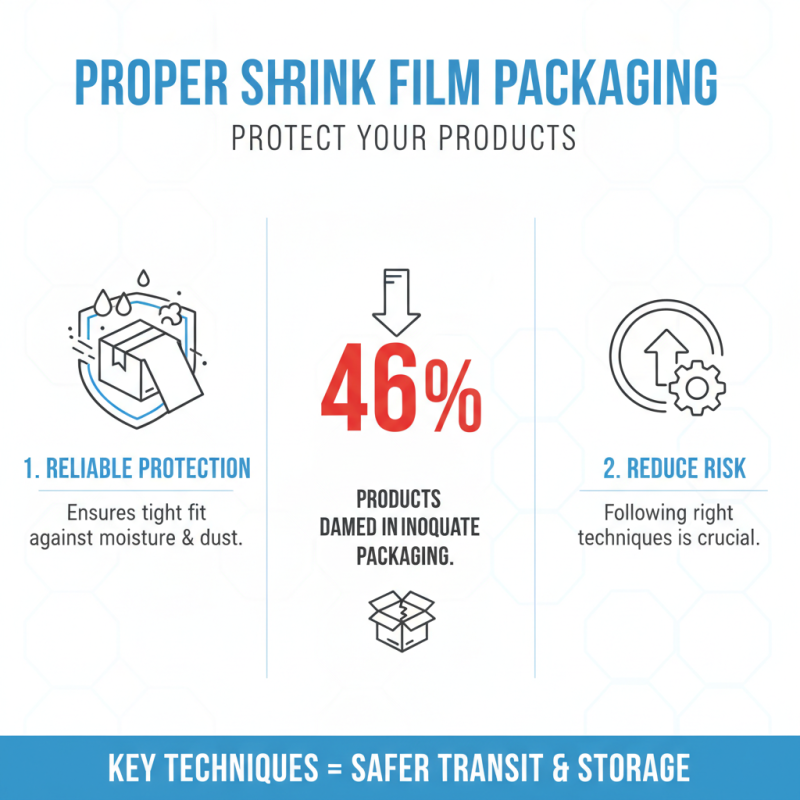
Shrink film packaging is a reliable choice for protecting products during transit and storage. Properly shrinking the film around products ensures a tight fit, safeguarding items against moisture and dust. According to industry reports, 46% of products are damaged due to inadequate packaging. Following the right techniques can significantly reduce this risk.
One critical technique involves using the correct temperature settings when applying heat to shrink film. Overheating can cause the film to tear, while inadequate heat can lead to loosened wraps. A report from the Packaging Association states that precise temperature control can improve packaging efficiency by up to 35%. Always test the heat settings with scrap material before shrinking your final products.
**Tip:** Ensure the product is clean and dry before wrapping. Contaminants can affect the film's adhesion and lead to flaws.
Another important aspect is the choice of shrink film. There are various types available, including PVC and polyolefin. Each type has unique properties, making them suitable for different products. Understanding these differences is crucial. Industry insights indicate that using the proper film type can enhance product visibility and shelf appeal.
**Tip:** Use a heat gun for small items. It allows for better control and reduces the risk of overheating. Always keep safety equipment on hand, as mistakes can happen.
Best Practices for Sealing and Finishing Shrink Wrapped Items
When it comes to shrink wrap sealing, precision matters. The right heat settings ensure your items are tightly secured. Using a heat gun or an oven, control the temperature carefully. Too high, and your film can melt. Too low, and it won’t seal properly. This delicate balance is crucial. Many users overlook it, leading to compromised product safety.
Consider your workspace. A clean area reduces contamination risks. Dust or debris can compromise the seal. Also, using a reliable cutting tool helps achieve accurate sizes. Thoughtless cuts can lead to wasted material. Don't forget to inspect sealed edges. Weak points may appear, allowing air in or moisture out. Resealing may be necessary, demanding additional time.
Using proper storage solutions post-packaging is vital. Even well-sealed products can degrade. Maintain optimal conditions, such as temperature and humidity. Regularly check for signs of damage. This ongoing vigilance is often neglected. Reflecting on these steps can help improve overall packaging quality. Combining meticulous sealing with optimal storage keeps products safe and secure.
Effectiveness of Shrink Film Packaging
Advantages of Using Shrink Film for Product Protection and Preservation
Shrink film packaging offers a reliable solution for product protection and preservation. According to industry reports, this packaging method can reduce damage during transit by up to 30%. The tight seal of shrink film protects against moisture, dust, and tampering, ensuring products arrive in optimal condition. Many businesses rely on shrink film to maintain product quality from manufacturer to consumer.
Using shrink film also enhances shelf life. Studies indicate that products encapsulated in shrink film can stay fresh for longer periods, thanks to its barrier properties. This film acts as a barrier to oxygen and odors, which can degrade products over time. A report found that 85% of companies using shrink film noted an increase in customer satisfaction due to improved product quality.
However, there are downsides to consider. Improper application can lead to packaging failures, resulting in damage during transport. Additionally, the environmental impact of shrink film raises valid concerns. Many manufacturers are exploring recyclable options, but the transition takes time. Companies need to balance protection with sustainability, making it crucial to evaluate material choices carefully.