Choosing the right China-based supplier for Plastic Shrink Packaging takes more than comparing quoted prices. The best fit depends on the product, packaging line, order volume, and delivery schedule. A film that looks clear and tight around a sample carton may behave differently on a fast production line. Details matter.
This guide explores how to assess manufacturers using practical criteria: film options, thickness consistency, sealing performance, print quality, sample availability, and production capacity. Buyers should also ask whether the proposed film suits their shrink tunnel and target application. Requesting samples and checking them on actual equipment can reveal wrinkles, weak seals, or uneven shrinking before a large order is placed. Those checks are useful, though they take time.
Supplier claims deserve careful review. Ask for current product specifications, quality-control procedures, and realistic lead times, then compare answers across several companies. Clear communication about minimum order quantities, customization, and packaging requirements can prevent avoidable delays. No single manufacturer is best for every buyer; that sounds obvious, yet it is easy to overlook when a low price arrives first. A polished website is not proof of consistent output. This overview offers a grounded starting point for identifying capable manufacturers in China and deciding which ones merit further evaluation. It does not replace factory audits, independent testing, or a trial order.
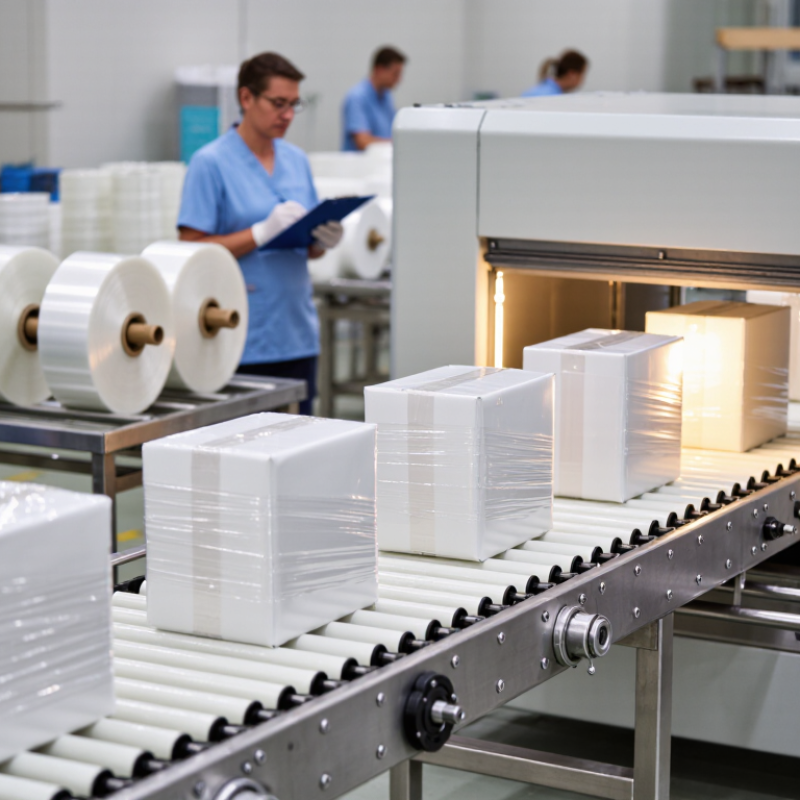
Plastic shrink packaging is a thin thermoplastic film that tightens when exposed to controlled heat. A product is wrapped or enclosed in the film, and the open edges are sealed. Heat then makes the material contract around the item. Heat does the work. After cooling, the film holds its shape and provides a clear outer layer for handling and display.
Common materials include polyolefin and polyethylene, selected according to the product, package size, and required strength. A small boxed item may use a lighter film, while bundled products often need more support. The actual result depends on film thickness, sealing quality, and temperature. With a heat tunnel, products pass through a heated chamber; smaller operations may use handheld equipment. Either way, even heating matters. Too much heat can wrinkle or damage the film, while too little may leave it loose.
Shrink film is useful for keeping items grouped and reducing exposure to dust, but it is not automatically waterproof or damage-proof. A neat package can hide a weak seal. For reliable results, operators should test the chosen film with the real product and check corners, seams, and labels after cooling. This part is sometimes overlooked. Packaging decisions also deserve review when product shape or shipping conditions change. A setup that works today may need adjustment tomorrow.

Shrink packaging is not one material or one format. The film should match the product, sealing equipment, and expected handling conditions. Polyolefin film is commonly used for retail items because it can provide clear presentation and flexible wrapping. Polyethylene is often selected for heavier bundles, where added toughness matters more than a tight, glossy finish. PVC is another option, but its suitability depends on the application and processing setup. Test before committing.
Common formats include shrink bags, sleeves, bundling film, and loose overwrap. A bag can enclose an irregular item with minimal equipment changes. Sleeves fit around bottles or containers and can cover a defined area. Bundling film holds several products together, such as cans or cartons, while overwrap creates a close-fitting cover around boxes or trays. Each format needs compatible sealing and heating conditions.
For a practical comparison, check film thickness, shrink behavior, seal strength, and the machine’s temperature range. Also consider how the package looks after cooling: wrinkles, loose corners, or cloudy areas can signal a poor match. A clean sample can still mislead. I would test real products at normal line speeds, including a few awkward shapes. That takes time, but prevents a costly guess.
Chinese shrink packaging manufacturers are often assessed by more than price or catalogue size. Their key capabilities include film selection, consistent printing, accurate sizing, and reliable production control. A capable team can explain how film thickness affects clarity, strength, and shrink performance. It should also ask about the product shape and packing conditions before recommending a specification.
Production flexibility matters. Some orders need clear sleeves; others require printed shrink bags or tamper-evident bands. Experienced operators can fine-tune sealing temperature and tunnel settings to reduce wrinkles, loose edges, or distortion. Ask for samples made with your actual product dimensions. A sample that looks good on a flat table may behave differently around corners. Small details matter.
Quality checks should cover more than appearance. Suppliers can document film gauges, print alignment, seal strength, and batch consistency, then share inspection records for review. Ask how they handle defects and repeat orders, and whether production samples are retained. No production line is flawless. In practice, a supplier’s response to a small mismatch can reveal as much as its sales presentation. Clear communication about lead times, tolerances, and packaging tests helps prevent avoidable surprises.
| Capability | Common Options or Range | What It Means for Buyers | What to Verify |
|---|---|---|---|
| Film material selection | PVC, PETG, OPS, and polyolefin (POF) shrink films are commonly used for different packaging applications. | Material choice affects shrink behavior, clarity, stiffness, sealing, recyclability, and suitability for the product and packaging line. | Request the exact film grade, technical data sheet, intended application, and applicable food-contact documentation where required. |
| Shrink sleeves and labels | Full-body sleeves, partial sleeves, tamper-evident bands, and cut-and-stack labels. | These formats can decorate containers with curved surfaces or provide a tamper-evident feature when designed for that purpose. | Confirm container dimensions, seam placement, perforation requirements, artwork setup, and compatibility with the application equipment. |
| Typical film thickness | POF shrink films are often available around 12–25 μm; sleeve films commonly fall around 35–50 μm, depending on material and use. | Thickness influences handling strength, package appearance, material use, and performance during conversion and shrinking. | Confirm the specified thickness and tolerance for the selected material; compare samples under actual production conditions. |
| Printing and decoration | Flexographic and gravure printing are common options; digital printing may be available for shorter runs or variable artwork. | Printing method affects setup costs, lead time, achievable run size, color consistency, and artwork flexibility. | Ask for a press proof or production sample, color-management details, minimum order quantities, and repeat-order controls. |
| Artwork and shrink compensation | Artwork can be adjusted to account for distortion as a sleeve or film shrinks around the package. | Appropriate distortion compensation helps keep logos, text, and graphics proportionate on the final container. | Provide the container drawing or sample and review a shrink simulation or physical trial before approving production artwork. |
| Finishing and conversion | Options may include slitting, perforation, seaming, cutting, roll winding, and conversion into sleeves or bands. | Finished roll or sleeve specifications need to match the customer’s applicator, sealing process, and packaging workflow. | Specify roll width, core size, winding direction, splice limits, sleeve dimensions, and perforation placement. |
| Packaging-line compatibility | Films and sleeves can be designed for manual, semi-automatic, or automatic application and shrink-tunnel processes. | Compatibility depends on the package shape, line speed, application method, sealing conditions, and heat profile. | Run trials on the intended equipment and record line speed, tunnel settings, seal quality, shrink uniformity, and reject rate. |
| Quality control | Relevant checks may include dimensions, thickness, print appearance, seam strength, roll winding, and shrink performance. | Documented checks help identify variation between production lots and reduce problems during application. | Request the inspection plan, acceptance criteria, batch traceability details, and a sample quality report. |
| Regulatory and sustainability documentation | Documentation may include material declarations, food-contact information where applicable, and recycling guidance for the chosen structure. | Compliance and recyclability depend on the material, product contact, destination market, and local collection systems. | Check documentation against the destination market’s rules and confirm whether the packaging structure is accepted by relevant recycling systems. |
| Sampling and production support | Many suppliers can provide prototypes, printed samples, or production trials before a full order. | Early sampling can reveal issues with fit, artwork distortion, sealing, and shrink behavior before scale-up. | Agree on sample specifications, approval steps, lead times, production tolerances, and how approved samples will be retained. |
Capabilities, material availability, thickness ranges, certifications, and production limits vary by supplier and application. Confirm specifications and performance using current documentation and production-line trials.
A strong plastic shrink packaging manufacturer should provide more than a competitive quote. Ask for written film specifications, including thickness, shrink ratio, sealing range, and recommended storage conditions. Request recent test reports for seal strength and package consistency. Check whether the manufacturer can trace each production lot to its material records. Small details matter.
Evaluate quality systems through documents and practical checks. Review inspection procedures, defect records, and corrective actions, not just a certificate on the wall. Ask how the team handles changes to resin, film suppliers, or production settings. Confirm that compliance documents match your product, packaging use, and destination market. Requirements differ, so verify current expectations with qualified local guidance. A checklist can miss things. A factory visit or video walkthrough may reveal how samples are labeled, stored, and inspected, though one visit cannot prove consistent performance.
Tips: Send the same sample request to each candidate. Compare film clarity, shrink behavior, seam strength, and written tolerances. Keep a dated sample for later checks, and record any unanswered questions. If a claim sounds unusually broad, ask for the supporting test method and report.
China’s shrink packaging sector serves food and beverage, home-care, cosmetics, electronics, and printed-goods producers. Food factories use film to bundle bottled drinks, seal trays, or group small containers for retail. Personal-care makers package soap sets and compact boxes, while electronics suppliers protect accessories from dust during storage and shipping. Publishers and stationery manufacturers use clear wraps to keep books, notebooks, and multipacks neat. Factories also use PE shrink film for pallet loads and heavier industrial bundles. These applications differ in film thickness, shrink temperature, clarity, and line speed. Those details matter.
Buyers often compare film type with product shape, packing equipment, transport distance, and warehouse conditions. POF can suit smaller retail packs. PE is often selected for bundles and larger loads. Still, a material that works on paper may wrinkle around sharp corners or distort under excess heat. That is easy to overlook. Trial runs, sample rolls, and seal-quality checks can reveal problems before full production. Supplier support also varies, so clear specifications help.
Tips: Share pack dimensions, target weight, machine speed, and shipping conditions when requesting samples. Test the film on your own line, not only by appearance.