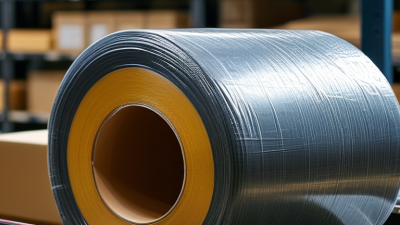
Choosing the best Shrink Wrap supplier in China requires more than comparing prices. A reliable partner must understand film performance, packaging conditions, production controls, and delivery expectations. The right supplier should provide clear material specifications, stable thickness, consistent sealing, and practical support for your products.
Details matter. During supplier evaluation, buyers should review factory experience, production capacity, sample quality, and quality inspection procedures. Ask about polyethylene types, film clarity, shrink ratios, puncture resistance, and available customization. A professional supplier should explain these points in simple terms, not hide behind impressive claims. Samples should be tested on real packaging equipment, because a film that looks good on a desk may wrinkle, tear, or seal poorly during production.
Documentation also supports trust. Check business credentials, product test reports, export experience, and relevant quality systems. Independent inspections can provide useful evidence before large orders are confirmed. However, certificates alone do not guarantee dependable performance. That answer matters. Communication speed, corrective action, packaging protection, and shipment consistency often reveal a supplier’s real working standards.
This guide examines practical factors for identifying a capable Chinese Shrink Wrap manufacturer or trading partner. It considers product quality, customization, pricing, lead times, technical service, and long-term reliability. The word “best” is not absolute; it depends on your machinery, market, order volume, and packaging goals. I may be cautious here, but that is intentional. A lower quotation can become expensive when film waste, damaged cartons, or delayed deliveries affect your operation. A careful comparison creates stronger purchasing decisions and reduces avoidable surprises.
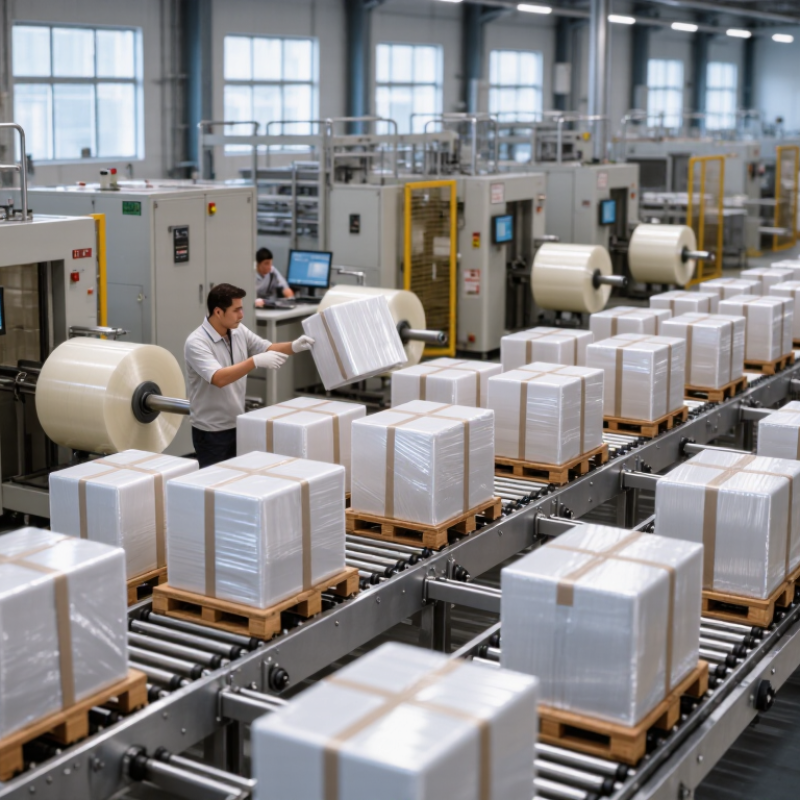
The best shrink wrap supplier in China is defined by evidence, not attractive quotations. A capable supplier controls film thickness, shrink ratio, seal strength, haze, and coefficient of friction. These details affect every wrapped carton. Ask for recent test reports, production samples, and batch traceability. A reliable factory should explain its resin sources, extrusion controls, and inspection frequency in clear language.
Data supports this careful approach. The OECD Global Plastics Outlook reports that packaging creates about 40% of global plastic waste. Therefore, a serious supplier should reduce unnecessary film use without weakening package protection. Smithers’ packaging forecasts also place global packaging demand above 1 trillion US dollars in the coming years, increasing pressure for efficient and measurable production. Look for downgauging trials, recyclable structures where suitable, and documented material performance. Sustainability claims need numbers.
Experience is visible on the factory floor. Inspect clean extrusion lines, calibrated gauges, sealed sample storage, and pallets protected from heat. Confirm lead times with a small trial order before committing to volume. Check how the supplier handles film breaks, uneven shrinking, and late deliveries. No supplier performs perfectly forever. That is the uncomfortable part. The best partner records failures, investigates root causes, and corrects them openly. Certificates help, but consistent data and responsive communication matter more. Small details matter.

What Is the Best Shrink Wrap Supplier in China?
Key Types of Shrink Wrap Products and Their Applications
Shrink wrap selection depends on the product, packaging line, and storage environment. Polyolefin film offers clear presentation, strong seals, and reliable protection for retail goods, printed materials, and household products. It usually performs well around products with sharp corners. However, incorrect heat settings can cause wrinkles or weak seals.
Polyethylene shrink film is thicker and more flexible. It suits bundled cartons, beverage cases, furniture parts, and larger industrial packages. Its toughness helps during transport, where rough handling may occur. PVC film can provide strong clarity and easy shrinking for smaller retail items. Yet, packaging teams should check ventilation, equipment compatibility, and local requirements before using it.
A reliable Chinese supplier should provide samples, technical data, thickness options, and consistent batch records. Ask about shrink ratio, tensile strength, sealing temperature, and roll dimensions. These details affect material waste and machine performance. In practical testing, a film may look excellent but fail around corners or under cold storage conditions. That is why trial runs matter.
The best supplier is not always the cheapest. Quality control should include incoming material checks, production inspections, and final roll measurements. Clear communication also matters. Small misunderstandings about core size or film width can stop a packing line. Supplier evaluations should remain ongoing, because performance can change between batches.
What Is the Best Shrink Wrap Supplier in China?
How to Evaluate Chinese Shrink Wrap Suppliers
The best supplier is not always the cheapest. Evaluate film performance, production control, communication, and after-sales reliability. A clear specification should include film thickness, width, shrink ratio, core size, and packaging method.
Request samples from the same production grade you may purchase. Test them around your actual products. Check sealing strength, puncture resistance, clarity, and shrink uniformity. A film can look excellent on a sample roll but perform poorly at higher machine speeds. I have seen small thickness variations create loose corners and uneven packages. That detail is easy to overlook.
Ask for recent quality records, material traceability, and relevant factory certifications. Confirm whether testing uses calibrated equipment. Review production capacity, minimum order quantities, lead times, and storage conditions. The supplier should explain how rejected rolls are identified and replaced. Visit the facility when practical, or arrange a live video inspection. Photos are useful, but limited.
Reliable suppliers answer technical questions with measurements, not vague promises. Compare their quotation with the full landed cost, including packaging and delivery. Request a written quality agreement before placing a large order. I would also test a small batch before committing. It takes longer, but it exposes problems early. Mistakes happen, even with experienced suppliers. Their response matters most.
A reliable shrink wrap supplier in China should prove quality through standards, certifications, and repeatable production. ISO 9001 certification shows a documented quality system, but it does not guarantee perfect film. The 2023 ISO Survey lists China as the world’s largest holder of ISO 9001 certificates, with more than one million registrations. Buyers still need factory-level evidence. Request batch records, calibration reports, and recent test results.
For shrink film, check thickness tolerance, shrink ratio, tensile strength, puncture resistance, sealing performance, and haze. A capable producer should control resin sourcing, extrusion temperature, cooling, slitting, and packaging conditions. Ask whether the factory uses blown-film or cast-film lines, and whether it can maintain stable output across different widths. Relevant certifications may include ISO 9001, ISO 14001, and BRCGS Packaging Materials. Food-contact documentation must match the destination market. Smithers’ recent flexible-packaging outlook identifies downgauging, recyclability, and material efficiency as continuing industry priorities. Thinner film can reduce waste, but it may tear more easily. That trade-off deserves testing.
Tips: Ask for samples from three production batches, not one attractive roll. Measure thickness at several points. Inspect the core, edge trimming, and printed identification. A certificate can be genuine. The shipment can still vary. Include acceptance limits in the purchase agreement, and consider an independent pre-shipment inspection.
| Evaluation Category | Key Dimension | Recommended Industry Benchmark | Relevant Standard or Certification | Verification Evidence |
|---|---|---|---|---|
| Quality Management | Documented quality management system | A controlled system covering incoming materials, production, inspection, nonconformity handling, and corrective actions | ISO 9001:2015 | Valid certificate, certification scope, issuing-body details, and recent audit records |
| Material Control | Resin traceability | Each production batch should be traceable to resin lot, formulation, production date, and finished-roll records | Supplier-specific traceability procedure; ISO 9001 controls | Batch numbers, certificates of analysis, material receiving records, and retained samples |
| Film Structure | Film construction | Single-layer or coextruded structure selected according to required strength, sealing performance, and shrink behavior | Product specification and approved technical data sheet | Layer structure, resin types, thickness specification, and production process description |
| Dimensional Quality | Film thickness and width consistency | Actual values should remain within the agreed purchase tolerance across the full roll and production batch | ASTM D374; agreed customer specification | Online thickness records, width inspection reports, calibrated gauges, and roll inspection data |
| Mechanical Performance | Tensile strength and elongation | Values should meet the approved specification in both machine direction and transverse direction | ASTM D882 or ISO 527-3 | Laboratory test report showing test direction, specimen preparation, conditioning, and results |
| Puncture Resistance | Resistance to impact and sharp package edges | Performance should be validated for the intended package weight, shape, handling method, and transport conditions | ASTM D1709 or an agreed equivalent test method | Impact-test results, package simulation data, and customer-approved trial records |
| Shrink Performance | Machine-direction and transverse-direction shrinkage | Shrink percentage and shrink force should match the packaging equipment and specified operating temperature | ASTM D2732; customer-approved test conditions | Shrink curve, test temperature, dwell time, sample direction, and batch test results |
| Heat Sealing | Seal strength and sealing window | Stable seals should be achieved within the customer’s equipment speed, temperature, pressure, and dwell-time range | ASTM F88/F88M; customer process validation | Seal-strength results, seal-initiation temperature, operating window, and line-trial report |
| Optical Quality | Haze and clarity | Optical performance should be selected according to retail presentation, product visibility, and packaging requirements | ASTM D1003 | Haze or clarity test results, visual standards, and approved production samples |
| Friction Control | Coefficient of friction | Friction should support reliable film feeding, stacking, sealing, and automated packaging-line operation | ASTM D1894 or ISO 8295 | Static and kinetic coefficient-of-friction results under specified test conditions |
| Food Contact | Regulatory suitability for food packaging | The exact resin, additives, ink, adhesive, and finished-film structure must be compliant with the destination market | FDA 21 CFR 177.1520; EU Regulation No. 10/2011, where applicable | Declaration of compliance, migration test report, formulation statement, and intended-use limitations |
| Environmental Management | Environmental controls | Documented controls for energy use, waste handling, emissions, recycling, and environmental legal compliance | ISO 14001:2015 | Valid certificate, environmental procedures, waste records, and applicable permits |
| Production Capacity | Extrusion and conversion capability | Production lines should support the required film width, thickness range, roll format, printing or perforation options, and order volume | Approved technical capability statement | Line list, maximum web width, thickness range, equipment specifications, and capacity plan |
| Process Stability | Online process monitoring | Critical parameters such as thickness, temperature, line speed, tension, and winding quality should be monitored and recorded | Internal process-control plan; ISO 9001 principles | Electronic or paper production records, control charts, calibration certificates, and inspection frequency |
| Laboratory Capability | In-house testing equipment | The facility should be able to test the critical properties listed in the product specification before shipment | Applicable ASTM, ISO, or national test methods | Equipment inventory, calibration records, test procedures, technician training records, and sample reports |
| Packaging and Logistics | Roll protection and shipment control | Rolls should be protected from moisture, dust, deformation, telescoping, and transit damage | Customer packaging specification; agreed shipping standard | Packaging drawings, pallet configuration, loading photos, moisture protection, and shipment inspection checklist |
| Consistency | Batch-to-batch uniformity | Repeat orders should maintain consistent appearance, dimensions, shrink behavior, sealing performance, and mechanical properties | Approved golden sample and statistical quality-control plan | Historical quality data, control charts, retained samples, complaint records, and corrective-action reports |
| Supplier Qualification | Pre-shipment and third-party inspection readiness | The supplier should accept defined inspection criteria, sampling plans, and independent audits when required | ISO 2859-1 sampling plan or customer-specific inspection standard | Inspection procedure, acceptance criteria, audit cooperation policy, and completed inspection reports |
What Is the Best Shrink Wrap Supplier in China?
A dependable shrink wrap supplier is judged beyond a low factory quote. Pricing starts with material clarity. Ask whether the film uses PVC, PE, or POF, and confirm thickness in microns. Request prices at several volumes. Small orders often carry setup costs. A useful quotation lists roll length, core size, packaging, inspection fees, and trade terms. Without these details, comparisons can mislead. I would also check tolerance data, because cheaper film may break during sealing. That weakness costs more than expected.
Customization should match the product and packing equipment. Suppliers may adjust width, length, thickness, shrink ratio, color, perforation, and printing. Ask for a physical sample before approving mass production. Test it around the actual package, not only a sample carton. Artwork approval needs careful attention. A tiny text error can affect hundreds of rolls. I have seen specifications change late, so written confirmation remains essential.
Shipping support can protect both schedule and film quality. Confirm production time, carton protection, pallet dimensions, loading photos, and moisture precautions. Sea freight usually suits large orders, while air freight may help with urgent samples. Ask who prepares export documents and tracks the shipment. Reliable support also includes responsive communication, quality inspection records, replacement procedures, and technical advice during sealing tests. Some suppliers answer quickly before payment, then respond slowly afterward. That risk deserves direct questions and a trial order.
Pricing, customization, shipping, and supplier support benchmark
This anonymized benchmark uses a 100-point procurement framework rather than company or brand ratings. A strong supplier should provide competitive PE film pricing, flexible customization, reliable shipping coordination, responsive support, and complete quality documentation. Typical reference ranges include approximately $1.30–$2.00 per kg for standard PE shrink film, a 1–2 metric ton minimum order, 15–25 business days for production, and 3–7 business days for samples, depending on specification and destination.